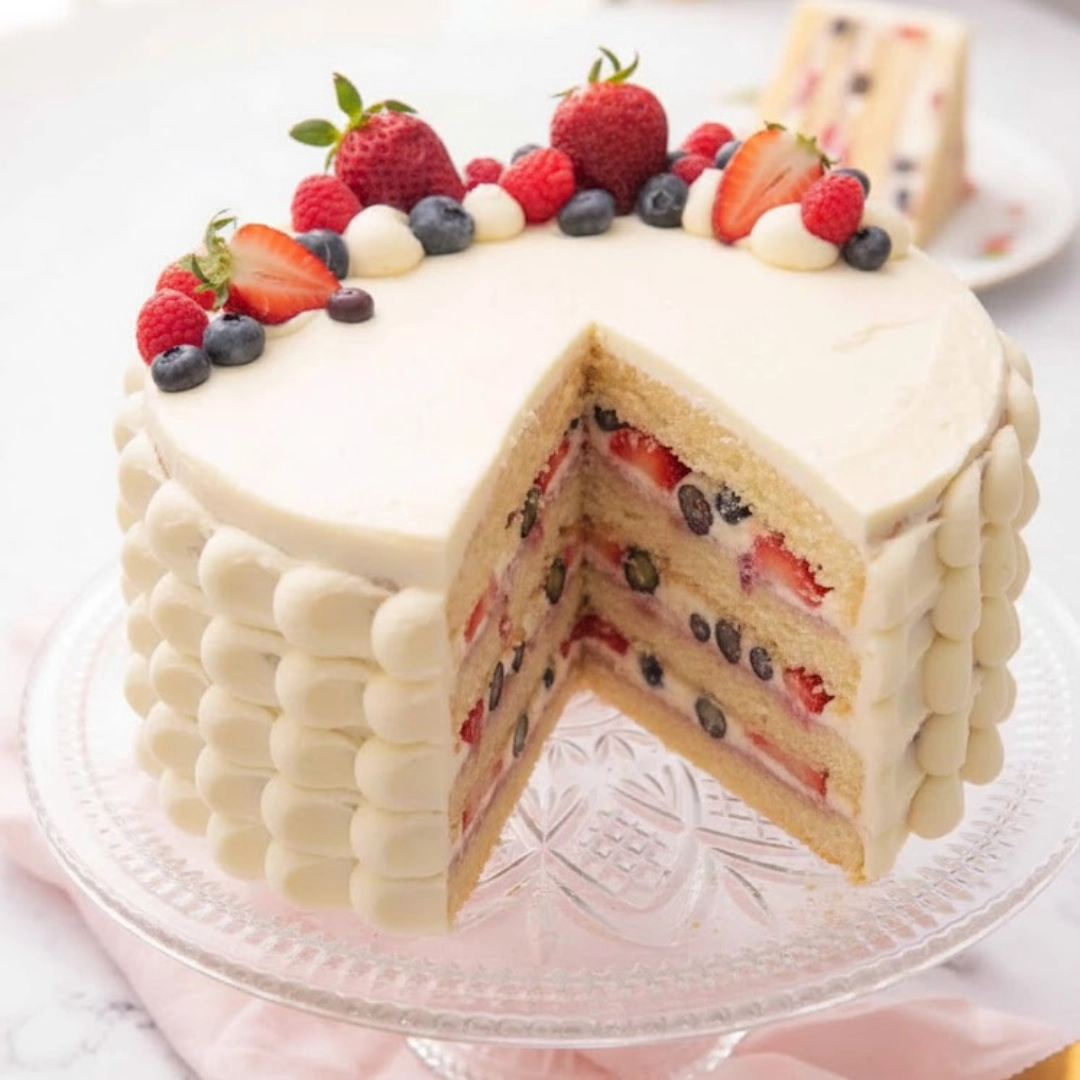
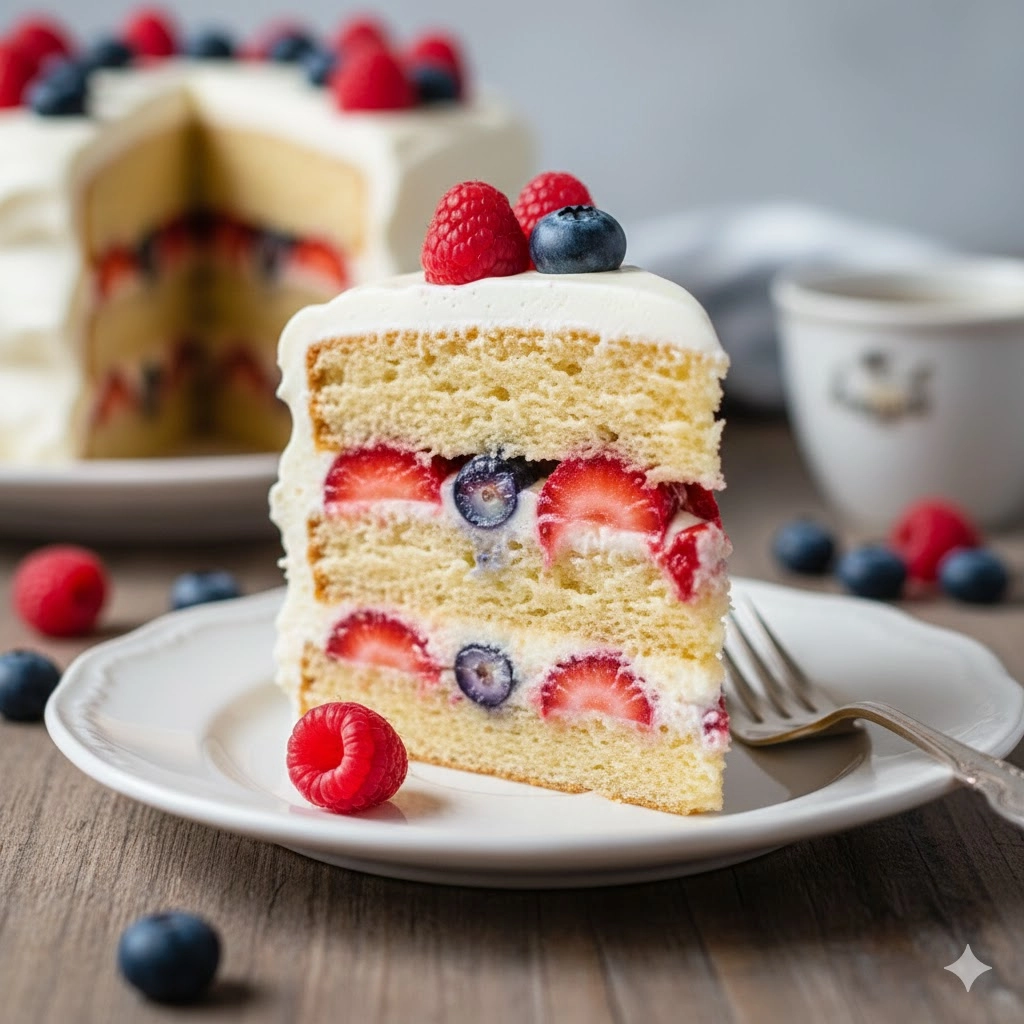
The Berry Chantilly Cake is a masterpiece of confectionary balance, a multi-layered creation that is somehow both light and decadent. Originating in the South, this cake takes a delicate, soft vanilla or almond-scented sponge and fills it with fresh, vibrant berries and a cloud-like, cream cheese-stabilized whipped cream—the titular Chantilly cream. It’s the ideal dessert for celebrations like birthdays, weddings, or any springtime gathering, as it delivers a festive visual presentation and a truly refreshing, not-too-sweet flavor profile that appeals to nearly everyone. The true secret to this cake lies in its incredibly airy texture and the harmonious contrast between the sweet cream and the slightly tart fresh fruit.
Table of Contents
Foundation of Flavor: Assembling the Components
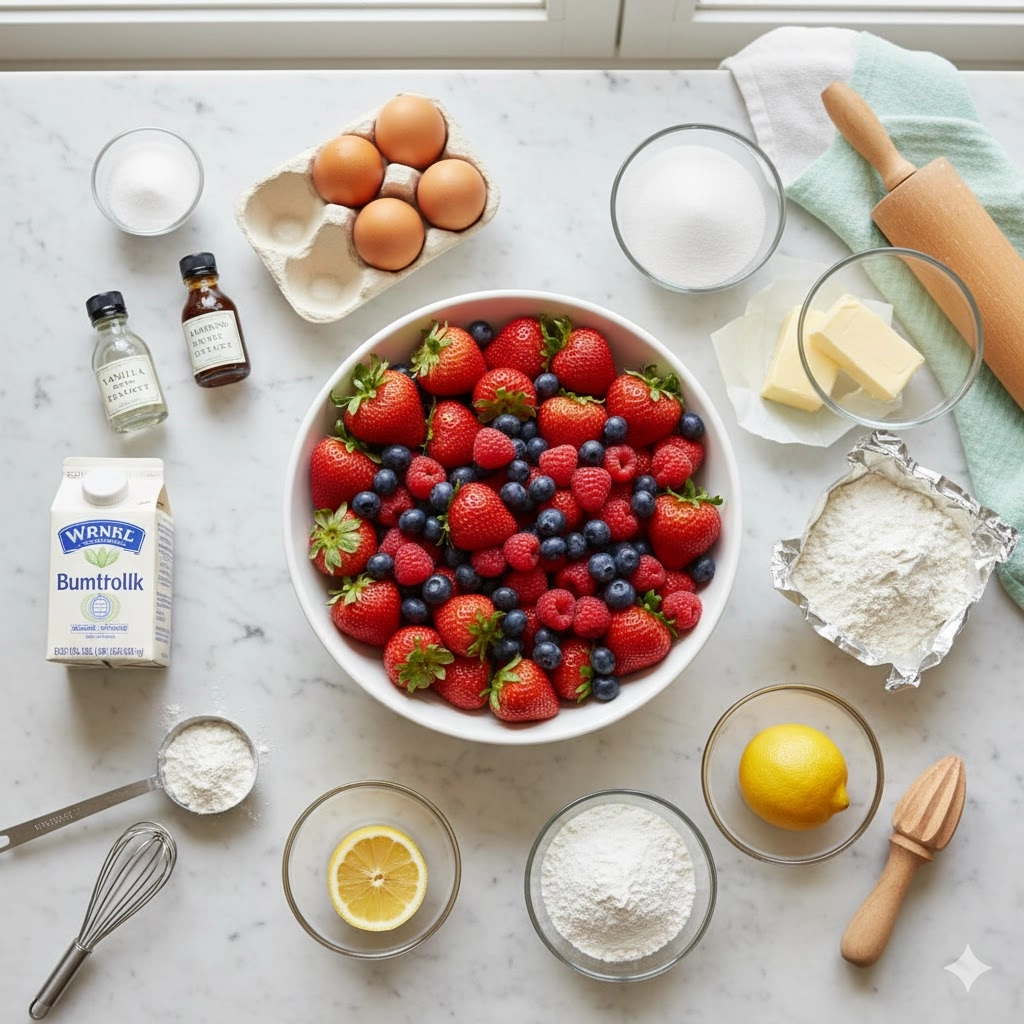
The Berry Chantilly Cake requires three distinct components: the tender cake layers, the rich Chantilly frosting, and the fruit mixture. Planning ahead is key, as several elements benefit from chill time.
Ingredients for the Cake Layers
- 3 cups (360 grams) all-purpose flour
- 1 tablespoon baking powder
- 1 teaspoon fine sea salt
- 1 cup (227 grams) unsalted butter, softened
- 2 cups (400 grams) granulated sugar
- 4 large eggs, room temperature
- 1 tablespoon vanilla extract
- 1 cup (240 milliliters) buttermilk, room temperature
Ingredients for the Classic Chantilly Frosting
- 16 ounces cream cheese, softened
- 1 cup (227 grams) unsalted butter, softened
- 5 cups (600 grams) confectioners’ sugar
- 1 teaspoon vanilla extract
- 1/2 teaspoon almond extract (optional, for depth)
- 1 cup (240 milliliters) heavy whipping cream, chilled
Ingredients for the Berry Filling
- 1 pint fresh strawberries, sliced
- 1 pint fresh blueberries
- 1 pint fresh raspberries
- 1/2 cup granulated sugar
- 1 tablespoon lemon juice
The Baking Blueprint: Simple Steps to Success
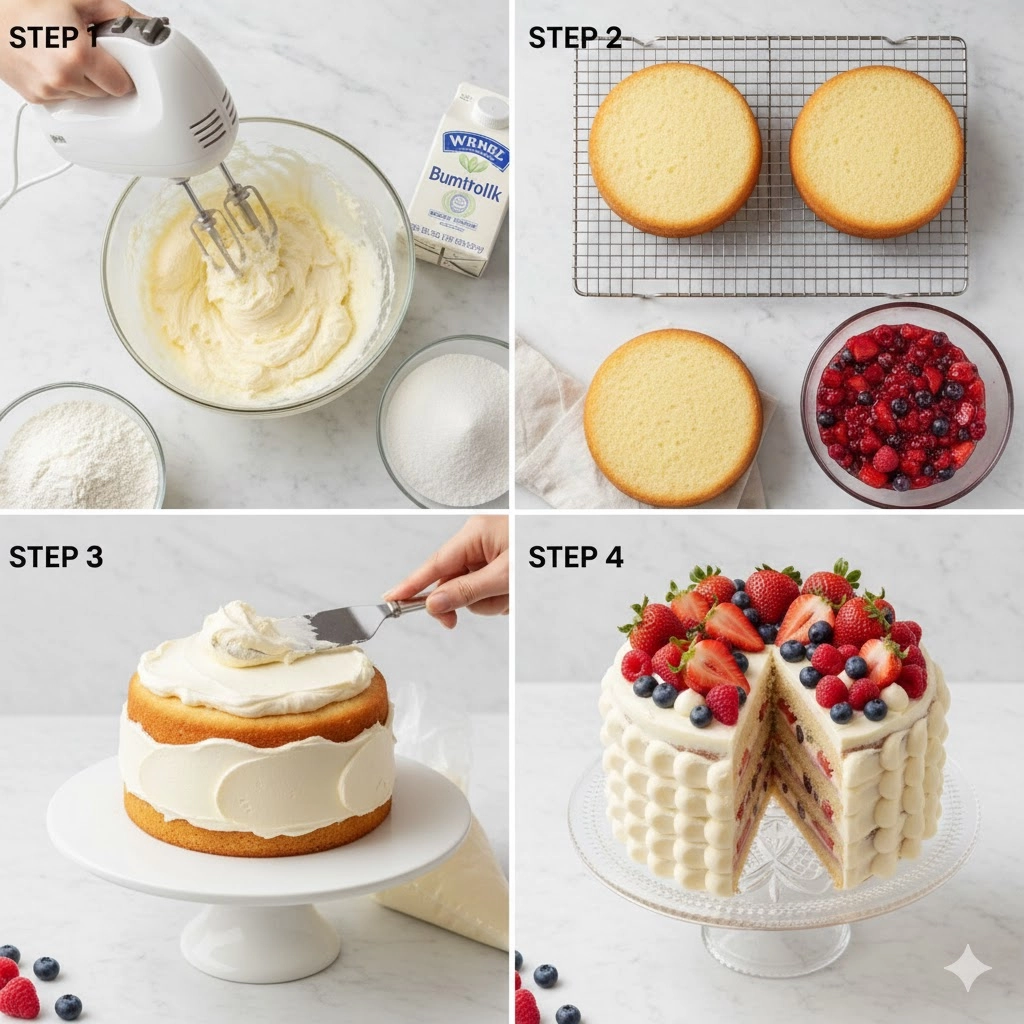
The construction of this cake moves in three phases: baking, frosting preparation, and final assembly. Following a systematic approach ensures a clean, stable, and perfectly flavored end result.
- Prepare Cake Pans and Preheat: Grease three eight-inch round cake pans and line the bottoms with parchment paper. Preheat your oven to three hundred fifty Fahrenheit.
- Combine Dry Ingredients: In a medium bowl, whisk together the flour, baking powder, and salt. Set aside.
- Cream Butter and Sugar: In the bowl of a stand mixer, beat the softened butter until smooth. Gradually add the granulated sugar and beat on medium-high speed until the mixture is very light and fluffy, about three to five minutes.
- Incorporate Wet Ingredients: Beat in the eggs, one at a time, ensuring each is fully incorporated before adding the next. Stir in the vanilla extract.
- Mix Batter: With the mixer on low speed, alternate adding the dry ingredient mixture and the buttermilk, beginning and ending with the dry ingredients. Mix only until just combined.
- Bake the Layers: Divide the batter evenly among the three prepared pans. Bake for twenty-five to thirty minutes, or until a toothpick inserted into the center of a cake comes out clean.
- Chill and Prepare Berries: Allow the cakes to cool in the pans for ten minutes before inverting them onto a wire rack to cool completely. While cooling, gently toss all berries with the sugar and lemon juice in a bowl and set aside to macerate.
- Make the Frosting: In a clean stand mixer bowl, beat the softened cream cheese and butter until smooth and lump-free. Gradually add the confectioners’ sugar, followed by the vanilla and almond extracts. Finally, with the mixer on low, slowly pour in the chilled heavy whipping cream and then increase speed to medium-high. Beat until the frosting is thick, stiff, and holds distinct peaks—this is the Chantilly cream.
- Assemble and Frost: Place the first cake layer on a serving platter. Spread one-quarter of the frosting evenly over the top. Spoon half of the macerated berries over the frosting. Top with the second cake layer, repeating the frosting and berry steps. Place the final layer on top, then use the remaining frosting to crumb coat and fully frost the entire exterior of the cake.
The Art of the Perfect Cake: Achieving Desired Texture and Flavor
Baking a multilayered cake requires a keen eye for detail. The magic of this particular cake is its incredibly moist crumb and the light, yet stable, cream. Success is found in mastering the technique of the three components.
Mixing for Airiness: Butter and Sugar
When creaming the butter and sugar, pay close attention to the mixture’s appearance. It should transform from a dense, pale yellow to a very pale, almost white color, increasing significantly in volume—a process called aeration. This typically takes a full three to five minutes on medium speed. This step is crucial, as the air pockets incorporated now are what give the final cake its characteristic light texture. If you rush this, the cake will be dense.
Incorporating Wet and Dry Ingredients
Once the butter, sugar, and eggs are creamed, the final mixing of the flour and buttermilk must be done delicately. Switch the mixer to the lowest setting or finish by hand with a spatula. You are aiming for just combined—no pockets of dry flour, but certainly no overmixing. Overmixing develops the gluten in the flour, which results in a tough, rubbery cake. Stop the moment the ingredients come together, even if small lumps remain. The gentle, low-speed alternation ensures the batter emulsifies without losing its airy structure.
Crafting a Stable Chantilly Cream
The key to an authentic Chantilly is stabilizing the whipped cream. Here, we use a classic American approach by folding the whipped cream into a standard cream cheese buttercream base. When making the cream cheese base, ensure the cream cheese and butter are truly soft. Any lumps at this stage will not beat out later. The transformation happens when the chilled heavy cream is added and whipped. Start slow, then increase the speed. Watch closely—the cream should go from liquid to soft peaks to stiff, structural peaks in a short amount of time. Stop immediately once the peaks are stiff. Overwhipping will turn the cream grainy and break the emulsion, making it impossible to spread smoothly. The final frosting should be light, luscious, and able to hold its shape against the weight of the berries.
Baking Indicators
When testing the layers for doneness, look for the edges to pull slightly away from the pan, and the surface should spring back lightly when touched. The toothpick test is reliable: it should come out clean. If you see a few moist crumbs clinging, the cake is perfect. If the toothpick is wet with batter, it needs a couple more minutes. If the toothpick is bone dry, you’ve likely overbaked it, which will result in a drier final texture.
Expert Culinary Guidance for Cake Perfection
Creating a professional-looking and tasting cake depends on a few critical details that separate a good cake from a truly great one.
- Torting for Uniformity: If your cake layers bake up with a slight dome, allow them to cool completely, then use a long serrated knife to gently saw the dome off, creating perfectly flat, level layers. This ensures the cake stacks neatly and prevents leaning.
- The Power of Almond Extract: While vanilla is essential, a small addition of almond extract—about half a teaspoon—in both the cake batter and the frosting is what often gives a classic Berry Chantilly Cake its signature, subtle complexity. It provides a deeper, more sophisticated flavor without being overtly “almond-y.”
- The Maceration Time: Don’t skip the step of tossing the berries with sugar and lemon juice. This process, called maceration, draws out the fruit’s natural juices and creates a light, flavorful syrup. Spooning these macerated berries and a small amount of the syrup onto the frosting layer not only enhances the fruit flavor but helps keep the cake moist.
- Preventing Berry Bleed: To prevent the red juice from the berries from seeping into the white frosting on the outside of the cake, make sure your crumb coat is completely chilled and firm before applying the final layer of frosting. Also, try to keep the berries nestled between the layers, away from the edges.
- Parchment Handles: To easily transfer the cake to a serving plate without damaging the delicate frosting, place four strips of parchment paper beneath the bottom cake layer, positioned around the cake’s perimeter. Frost the cake over these strips. Once the frosting is set, gently slide the paper strips out.
Flavor Adjustments and Ingredient Swaps
The base recipe is superb, but you can tailor this cake to different seasons, dietary needs, or flavor preferences.
- Different Fruit Combinations: While the classic uses a mix of strawberries, blueberries, and raspberries, you can easily substitute other fruits. Try a tropical Chantilly cake with mango, kiwi, and passionfruit, or an autumnal version with blackberries, plums, and a touch of orange zest in the cake batter.
- Cream Base Swap: For a lighter, more traditional European-style Chantilly, you can eliminate the cream cheese and butter and simply use pure whipped heavy cream (two cups) stabilized with a few tablespoons of powdered gelatin or meringue powder. This creates a much lighter, less rich frosting that is highly temperature-sensitive.
- Gluten-Free Flour: This recipe works beautifully with a one-to-one gluten-free baking blend that contains xanthan gum. Ensure all your other ingredients are room temperature for the best emulsion.
- Adding Citrus Zest: For a brighter flavor profile, incorporate the zest of one lemon into the cake batter along with the vanilla. This boosts the freshness and complements the berries wonderfully.
Presentation and Service: Ideas for a Memorable Dessert
This is a showstopper cake, and how you slice and serve it adds to the experience.
- A La Mode Presentation: While the cake itself is creamy, serving a slice with a small, complementary scoop of high-quality vanilla bean ice cream adds a layer of richness and temperature contrast.
- Garnish with Flair: The most striking presentation involves arranging a generous, decorative pile of fresh, whole berries on top of the finished cake, often dusting lightly with confectioners’ sugar just before serving.
- Coffee Pairing: The cake’s lightness and slight sweetness pair perfectly with dark, robust coffee. Serve with a freshly brewed pot of French roast or a strong espresso drink to cut through the creaminess.
- The Slice & Serve Technique: For clean slices, use a long, thin, non-serrated knife dipped in very hot water and wiped dry between each cut. This keeps the frosting from dragging and smearing the layers.
Common Inquiries About Chantilly Cakes
How far in advance can I make this cake?
The cake layers can be baked up to two days ahead of time and stored tightly wrapped at room temperature. The frosting is best made the day of assembly, but it can be prepared one day ahead and refrigerated. The full assembled Berry Chantilly Cake is best served within twenty-four hours of assembly, as the berries will begin to release excess moisture over time, which can compromise the cake’s stability.
Why did my cream cheese frosting separate or curdle?
This most often happens when the cream cheese and butter are not properly softened or when they are combined with the sugar at an incorrect temperature. Ensure both are at room temperature (about sixty-eight Fahrenheit) before beginning. If the mixture looks split, try adding one tablespoon of confectioners’ sugar and one tablespoon of cream, beating for thirty seconds. This often helps to re-emulsify the mixture.
Can I freeze the leftovers?
Yes, though the texture of the berries may change slightly upon thawing. The best way to freeze leftovers is to cut the cake into individual slices, place them on a small baking sheet to freeze for one hour, and then wrap each frozen slice tightly in plastic wrap followed by a layer of foil. Thaw slices in the refrigerator overnight.
What is the difference between Chantilly Cream and Whipped Cream?
True Chantilly Cream, historically, is simply sweetened vanilla-flavored whipped cream. However, in modern American baking, particularly in the context of the Berry Chantilly Cake, the term has evolved to mean a stabilized whipped cream frosting, often with cream cheese, mascarpone, or gelatin, making it much more structurally sound for frosting cakes.
Nutritional Snapshot
| Nutrient | Amount per Serving |
| Calories | 610 kcal |
| Protein | 8 g |
| Carbs | 90 g |
| Fat | 27 g |
| Fiber | 3 g |
| Sugar | 70 g |
| Sodium | 280 mg |
Disclaimer
Nutrition information is an estimate and may vary based on preparation and ingredients used.
A Majestic Guide to Crafting the Ultimate Berry Chantilly Cake
Ingredients
- 3 cups all-purpose flour (360 grams)
- 1 tbsp baking powder
- 1 tsp fine sea salt
- 1 cup unsalted butter, softened (227 grams)
- 2 cups granulated sugar (400 grams)
- 4 large eggs, room temperature
- 1 tbsp vanilla extract
- 1 cup buttermilk, room temperature (240 milliliters)
- 16 ounces cream cheese, softened
- 1 cup unsalted butter, softened (227 grams)
- 5 cups confectioners’ sugar (600 grams)
- 1 tsp vanilla extract
- 0.5 tsp almond extract (optional, for depth)
- 1 cup heavy whipping cream, chilled (240 milliliters)
- 1 pint fresh strawberries, sliced
- 1 pint fresh blueberries
- 1 pint fresh raspberries
- 0.5 cup granulated sugar
- 1 tbsp lemon juice
Instructions
- Grease three eight-inch round cake pans and line with parchment paper. Preheat oven to three hundred fifty Fahrenheit. Whisk together the flour, baking powder, and salt. Set aside.
- In a stand mixer, beat the softened butter until smooth. Gradually add the granulated sugar and beat on medium-high speed until the mixture is very light and fluffy, about three to five minutes. Add eggs one at a time, followed by the vanilla extract.
- On low speed, alternate adding the dry ingredient mixture and the buttermilk, beginning and ending with the dry ingredients. Mix only until just combined. Divide batter evenly among pans. Bake for twenty-five to thirty minutes, or until a toothpick comes out clean. Cool completely on a wire rack.
- Gently toss all berries with the sugar and lemon juice and set aside. For the frosting, beat softened cream cheese and butter until smooth. Gradually add confectioners’ sugar, then extracts. Slowly pour in chilled heavy whipping cream and beat on medium-high until the Chantilly frosting is thick and holds stiff peaks.
- Place the first cake layer on a serving platter. Spread one-quarter of the frosting evenly over the top. Spoon half of the macerated berries (including a little syrup) over the frosting. Top with the second cake layer, repeating the frosting and berry steps. Place the final layer on top, then use the remaining frosting to crumb coat and fully frost the entire exterior of the cake.
Notes
Equipment
- Three 8-inch round cake pans
- Stand mixer or electric hand mixer
- wire rack For cooling
- serrated knife For leveling layers
- mixing bowls