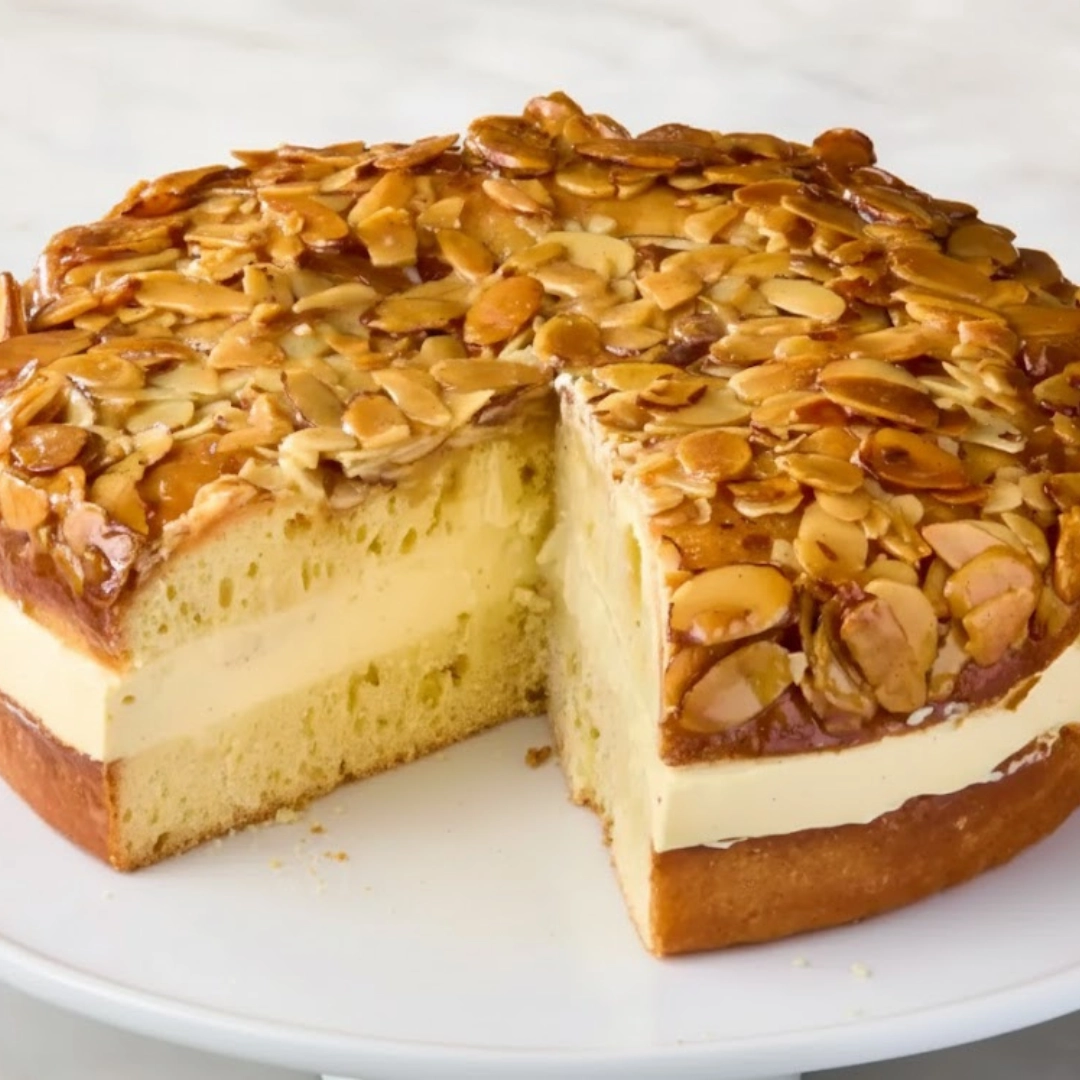
There are few desserts in the world that command as much respect and affection as the classic German Bee Sting Cake, known traditionally as Bienenstich. This isn’t your average birthday sponge; it is a sophisticated, multi-textured marvel that bridges the gap between pastry and bread. Featuring a brioche-like yeasted base, a crown of crunchy, honey-glazed almonds, and a center filled with clouds of vanilla-flecked diplomat cream, every bite is a study in balance. Whether you are a seasoned baker or a curious newcomer to yeasted doughs, this recipe provides a foolproof roadmap to creating a bakery-quality showstopper in your own kitchen.
Table of Contents
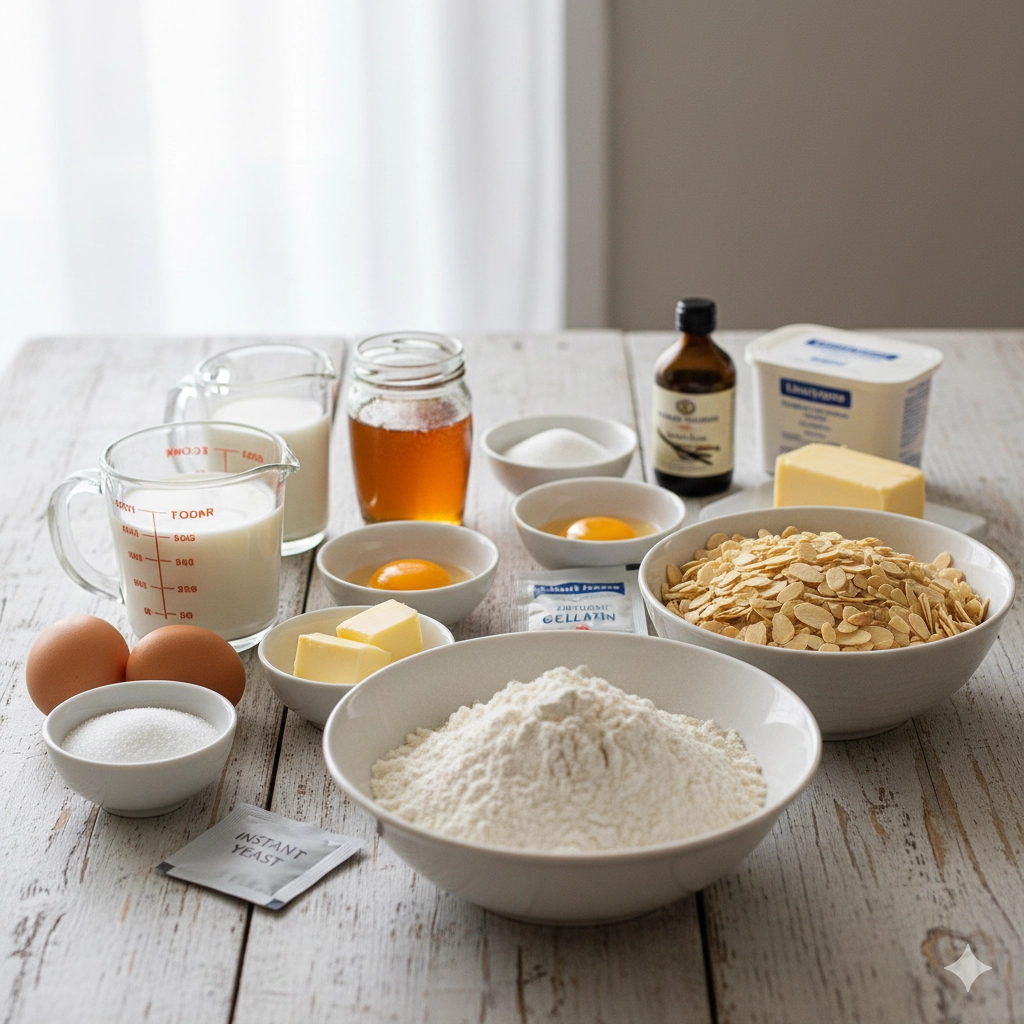
Ingredients
For the Yeasted Cake Base
- Cooking spray
- 4 tablespoons unsalted butter
- 1/4 cup whole milk
- 2 large eggs
- 1 cup all-purpose flour, plus additional for the work surface
- 1 cup bread flour
- 1/4 cup granulated sugar
- 1 (1/4 ounce) packet instant yeast
- 1/2 teaspoon kosher salt
For the Pastry Cream and Filling
- 1 cup whole milk, divided
- 4 tablespoons granulated sugar, divided
- 1 teaspoon vanilla bean paste
- 1 pinch kosher salt
- 2 tablespoons cornstarch
- 2 large egg yolks
- 1 tablespoon unsalted butter
- 4 teaspoons water
- 3/4 teaspoon powdered unflavored gelatin
- 3/4 cup cold heavy cream
- 3 tablespoons powdered sugar
For the Honey-Almond Topping
- 4 tablespoons unsalted butter
- 3 tablespoons honey
- 3 tablespoons granulated sugar
- 1/2 teaspoon vanilla bean paste
- 1 pinch kosher salt
- 1 cup sliced almonds
Instructions
Preparing the Yeasted Dough
- Prepare an 8 or 9 inch round cake pan and a large mixing bowl by coating them thoroughly with cooking spray. Line the bottom of the cake pan with a round of parchment paper.
- Dice 4 tablespoons of unsalted butter. In a small saucepan, combine the butter and 1/4 cup whole milk. Warm over medium-low heat until the milk is hot to the touch (approximately 110 degrees Fahrenheit) and the butter is nearly melted. Swirl to finish melting, then pour into a stand mixer bowl.
- Lightly beat 2 large eggs and add them to the milk mixture. Follow with 1 cup all-purpose flour, 1 cup bread flour, 1/4 cup granulated sugar, the packet of instant yeast, and 1/2 teaspoon kosher salt. Stir with a wooden spoon until a shaggy, sticky dough forms.
- Using the dough hook attachment, knead the dough on medium speed for 5 to 7 minutes until it becomes smooth while remaining slightly tacky. Transfer the dough to the oiled bowl, cover with plastic wrap, and let rise in a warm spot for about 1 hour until puffy.
Creating the Pastry Cream Base
- Set a fine-mesh strainer over a medium bowl. In a saucepan, combine 3/4 cup milk, 2 tablespoons granulated sugar, 1 teaspoon vanilla bean paste, and a pinch of salt. Heat over medium-low.
- In a separate bowl, whisk the remaining 1/4 cup milk, 2 tablespoons sugar, and 2 tablespoons cornstarch until smooth. Add the 2 egg yolks and whisk until the color lightens.
- Once the milk in the pan simmers, slowly pour half of it into the egg mixture while whisking constantly to temper the yolks. Return the entire mixture to the saucepan.
- Whisk continuously over medium heat for about 5 minutes until thick. Remove from heat, whisk in 1 tablespoon of butter, and press the cream through the strainer. Cover with plastic wrap directly on the surface and refrigerate for at least 1 hour and 15 minutes.
Baking and Topping
- Gently degas the risen dough on a floured surface. Press it into the prepared cake pan, reaching the edges. Cover and let rise for 30 minutes. Preheat your oven to 350 degrees Fahrenheit.
- To make the topping, simmer 4 tablespoons butter, 3 tablespoons honey, 3 tablespoons sugar, 1/2 teaspoon vanilla, and a pinch of salt in a small pan. Stir in 1 cup sliced almonds.
- Spread the almond mixture over the dough. Bake for 30 to 32 minutes until golden brown. Run a knife around the edges immediately. Cool in the pan for 20 minutes before moving to a wire rack to cool completely.
Assembly
- Bloom 3/4 teaspoon gelatin in 4 teaspoons water for 10 minutes, then microwave for 10 seconds to melt.
- Beat the chilled pastry cream until smooth. In the mixer, whisk cold heavy cream and 3 tablespoons powdered sugar, slowly pouring in the melted gelatin. Whip to stiff peaks.
- Fold the whipped cream into the pastry cream. Slice the cooled cake horizontally. Spread the filling on the bottom half, top with the almond-crusted lid, and refrigerate for 1 hour before serving.
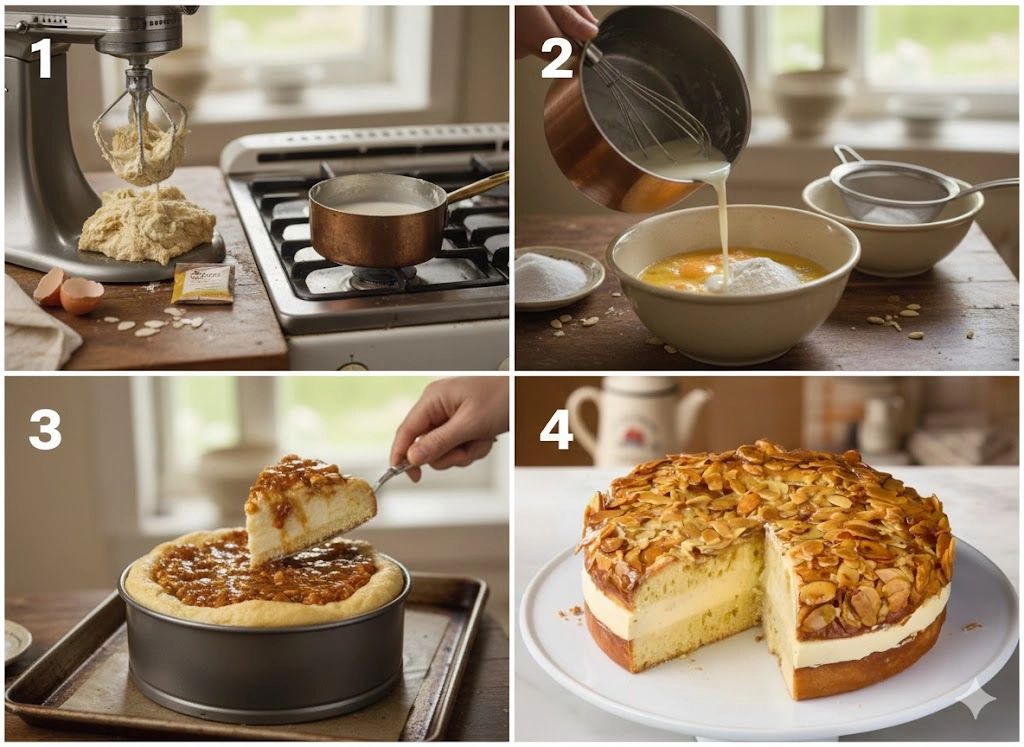
Step-by-Step Details: Navigating the Process
The journey of a Bee Sting Cake begins with the dough, which serves as the structural foundation. Unlike a standard sponge cake, this dough relies on yeast, which provides a unique chew and a slight tang that cuts through the sweetness of the topping. When you are combining the warm milk and butter, temperature is your most critical variable. You want it warm enough to activate the yeast but not so hot that it kills the living organisms. Aiming for 110 degrees Fahrenheit is the sweet spot. When kneading in the stand mixer, do not be tempted to add excess flour. The dough should be “smooth but still-sticky.” This high hydration is exactly what ensures the final cake is pillowy rather than dense or bread-like.
The second phase involves the pastry cream, which is the “soul” of the filling. Tempering the eggs is a technique that requires patience; by adding the hot milk slowly, you gradually raise the temperature of the yolks so they don’t scramble. Passing the finished cream through a fine-mesh strainer is a non-negotiable step for a professional finish, as it catches any tiny bits of cooked egg, ensuring a velvet-smooth mouthfeel.
Finally, the topping is what gives the Bienenstich its name. As the honey, sugar, and butter simmer, they form a quick caramel. When this is spread over the raw dough, it undergoes a transformation in the oven. The sugars bubble and seep slightly into the top layer of the dough, while the sliced almonds toast to a deep mahogany gold. This creates a shatteringly crisp contrast to the soft interior that defines the authentic experience.
Unique Culinary Insights: Achieving the Perfect Bienenstich
To truly master this German classic, one must understand the interaction between the almond topping and the cake’s structure. A common challenge is the “squish factor”—when you try to slice a filled cake, the pressure of the knife can cause the cream to burst out the sides. To prevent this, many professional bakers actually slice the top almond-crusted layer into individual wedges before placing them on top of the cream-covered base. This allows your knife to pass through the hard caramel layer without crushing the delicate diplomat cream below.
Another insight involves the “Diplomat Cream” itself. By combining pastry cream with gelatin-stabilized whipped cream, you create a filling that is lighter than custard but sturdier than plain whipped cream. The gelatin is the “insurance policy” that keeps your cake looking pristine on a serving platter for hours. When blooming the gelatin, ensure it is sprinkled evenly over the water to avoid dry clumps.
Lastly, don’t rush the cooling process. If you attempt to slice the cake or apply the cream while the bread is even slightly warm, the cream will melt, and the structural integrity will vanish. Patience is the most important ingredient in a yeasted cake.
Modifications & Substitutions
While the traditional recipe is a masterpiece of its own, there are several ways to adapt the Bee Sting Cake to your specific needs or pantry limitations.
- The Shortcut Filling: If you are pressed for time, you can swap the homemade pastry cream for a high-quality instant vanilla pudding mix (3.4 ounce box). However, to maintain the correct texture, you must still fold in the gelatin-stabilized whipped cream. This maintains the “fluff” required for a true Bienenstich.
- Nut Alternatives: If sliced almonds are unavailable or if there is a mild preference, flaked hazelnuts or even sunflower seeds can be used for the topping. The key is using a “flat” nut or seed that can be easily coated in the honey-butter glaze.
- Flavor Infusions: The vanilla bean paste provides a classic profile, but you can easily pivot. Try infusing the milk for the pastry cream with citrus zest, a cinnamon stick, or even a tablespoon of instant espresso powder for a mocha-style twist.
- Flour Balance: If you do not have bread flour, you can use 100 percent all-purpose flour. The cake will be slightly less “chewy” and more tender, though it may have a bit less height.
Accompaniments & Serving
Bee Sting Cake is traditionally a centerpiece for “Kaffee und Kuchen” (coffee and cake time) in Germany. Because the cake is quite rich, it pairs exceptionally well with a strong, acidic beverage. A dark roast coffee or a bold Earl Grey tea provides the perfect bitterness to cut through the honey and cream.
When serving at a brunch, consider a side of fresh berries—raspberries or tart blackberries work best. The acidity of the fruit brightens the palate between bites of the dense, honeyed almond topping. For an evening dessert, a small glass of dessert wine, such as a Riesling or a Sauternes, echoes the honey notes in the cake’s crust beautifully.
Deep-Dive FAQ
Why is it called Bee Sting Cake?
The most famous legend dates back to the 15th century and involves a territorial dispute between two German towns. It is said that two young bakers thwarted an invasion by throwing beehives at the attackers. To celebrate their victory and the “stings” they inflicted on their enemies, they created this honey-laden cake.
Can I use active dry yeast instead of instant yeast?
Yes, you can substitute active dry yeast, but the process changes slightly. You must “bloom” the active dry yeast in the warm milk and butter mixture for about 10 minutes until it becomes foamy before adding the flour and other ingredients. Instant yeast is preferred here for its reliability and faster rise time.
My almond topping sank into the dough. What happened?
This usually occurs if the dough was over-proofed before the topping was added, or if the topping was too heavy or hot. Ensure you only let the dough rise for the specified 30 minutes in the pan and allow the honey-almond mixture to cool for just a minute or two so it isn’t boiling hot when it hits the dough.
How do I get clean slices?
For the cleanest presentation, use a long serrated bread knife. Use a gentle sawing motion rather than pressing down hard. Additionally, wiping the knife blade with a warm, damp cloth between each cut will prevent the cream from smearing.
A Sweet Tradition to Remember
The Bee Sting Cake is more than just a dessert; it is a conversation piece that brings a touch of Old World European charm to your table. From the yeasty aroma of the baking dough to the scent of caramelizing honey and toasted almonds, it engages all the senses long before the first bite. While it requires a bit more effort than a box mix, the result is a sophisticated, professional-grade cake that will leave your guests wondering which high-end bakery you visited. Embrace the process, enjoy the scents of the kitchen, and savor every golden, creamy crumb.
Nutrition Information
| Item | Amount Per Serving (Based on 12 servings) |
| Calories | 385 calories |
| Total Fat | 22 grams |
| Saturated Fat | 12 grams |
| Cholesterol | 95 milligrams |
| Sodium | 180 milligrams |
| Total Carbohydrates | 42 grams |
| Dietary Fiber | 2 grams |
| Sugars | 24 grams |
| Protein | 7 grams |
Disclaimer
Nutritional values are estimates based on standard ingredient data. Actual nutritional content may vary depending on specific brands used and portion sizes. Consult a professional nutritionist for strict dietary requirements.
Authentic Bee Sting Cake (Bienenstich)
Ingredients
- 4 tbsp unsalted butter, diced (for dough)
- 0.25 cup whole milk (for dough)
- 2 large eggs, lightly beaten
- 1 cup all-purpose flour
- 1 cup bread flour
- 0.25 cup granulated sugar (for dough)
- 1 packet instant yeast (1/4 ounce)
- 0.5 tsp kosher salt
- 1 cup whole milk, divided (for pastry cream)
- 4 tbsp granulated sugar, divided (for pastry cream)
- 1 tsp vanilla bean paste
- 2 tbsp cornstarch
- 2 large egg yolks
- 1 tbsp unsalted butter (for pastry cream)
- 4 tsp water
- 0.75 tsp powdered unflavored gelatin
- 0.75 cup cold heavy cream
- 3 tbsp powdered sugar
- 4 tbsp unsalted butter (for topping)
- 3 tbsp honey
- 3 tbsp granulated sugar (for topping)
- 1 cup sliced almonds
Instructions
- Heat milk and butter to 110 degrees Fahrenheit. Combine with eggs, flours, sugar, yeast, and salt. Knead for 5-7 minutes until smooth but sticky. Let rise for 1 hour.
- Heat 3/4 cup milk, 2 tbsp sugar, vanilla, and salt. Whisk remaining milk, sugar, cornstarch, and egg yolks. Temper the yolks with hot milk, then cook until thickened. Stir in butter and strain.
- Press chilled pastry cream through a strainer and cover with plastic wrap directly on the surface. Refrigerate until cold, about 75 minutes.
- Degas dough, press into a lined 9-inch pan, and let rise for 30 minutes. Preheat oven to 350 degrees Fahrenheit.
- Simmer butter, honey, sugar, vanilla, and salt. Stir in almonds. Spread over the dough and bake for 30-32 minutes until golden.
- Bloom gelatin in water, melt in microwave. Whip heavy cream with powdered sugar and gelatin to stiff peaks. Fold into the pastry cream.
- Slice cooled cake horizontally. Spread filling on the bottom half. Top with the almond layer. Refrigerate for 1 hour to set.
Notes
Equipment
- Stand mixer with hook and whisk attachments
- 8 or 9-inch round cake pan
- Fine-mesh strainer
- small saucepan
- wire cooling rack
- Serrated bread knife Crucial for clean slices through the almond crust.