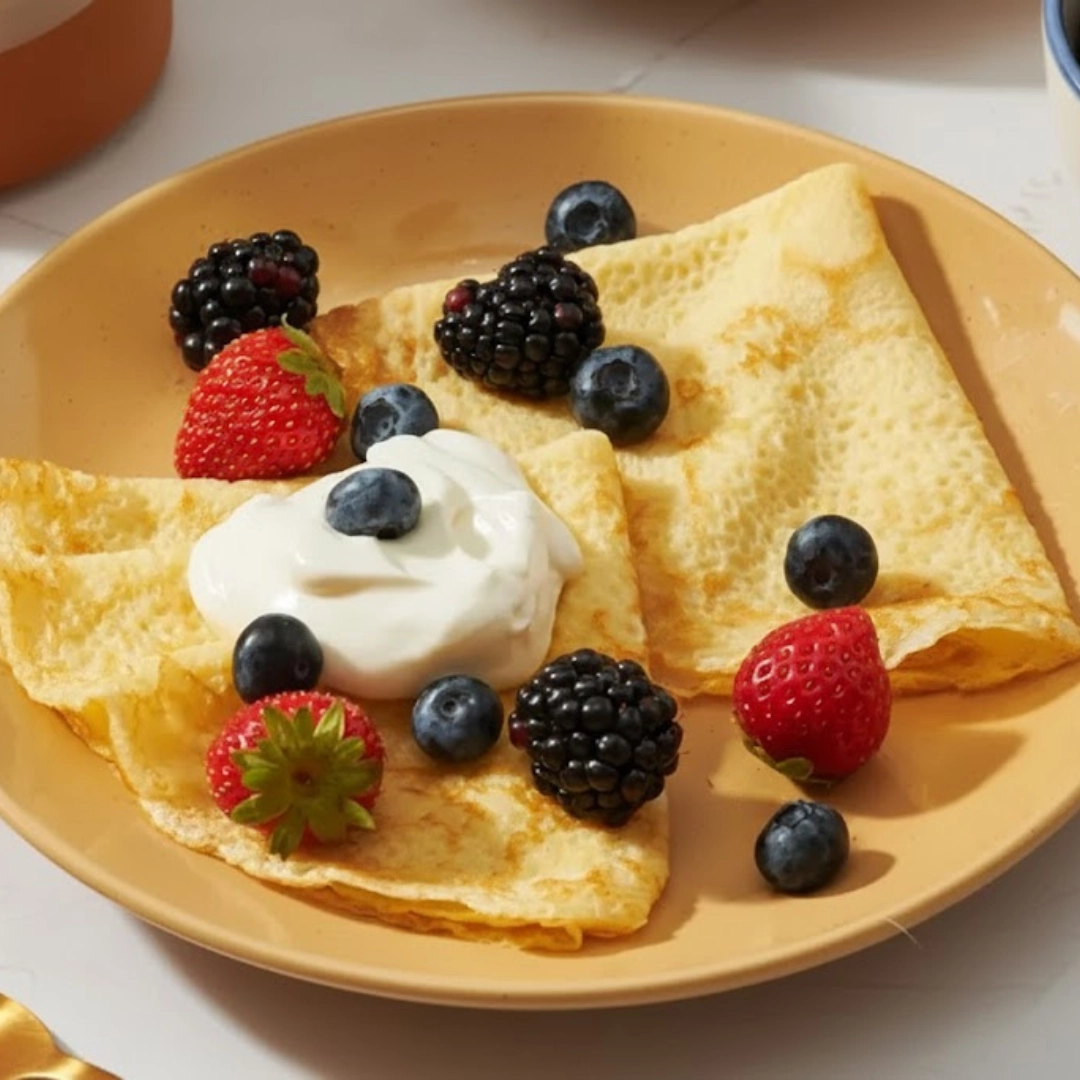
The beauty of basic crêpes lies in their incredible utility; they are the sophisticated, paper-thin cousins of the pancake, capable of transforming a few humble ingredients into a five-star meal. By mastering the delicate balance of fluid batter and precise pan temperature, you can create a stack of versatile rounds that work just as well with a sprinkle of sugar as they do with a savory mushroom ragout. This particular method focuses on achieving a lacy, tender texture that remains pliable for folding and rolling. Whether you are hosting a weekend brunch or seeking a light evening meal, these French-style delights offer a blank canvas for your culinary creativity.
Table of Contents
The Elements of a Perfect Batter
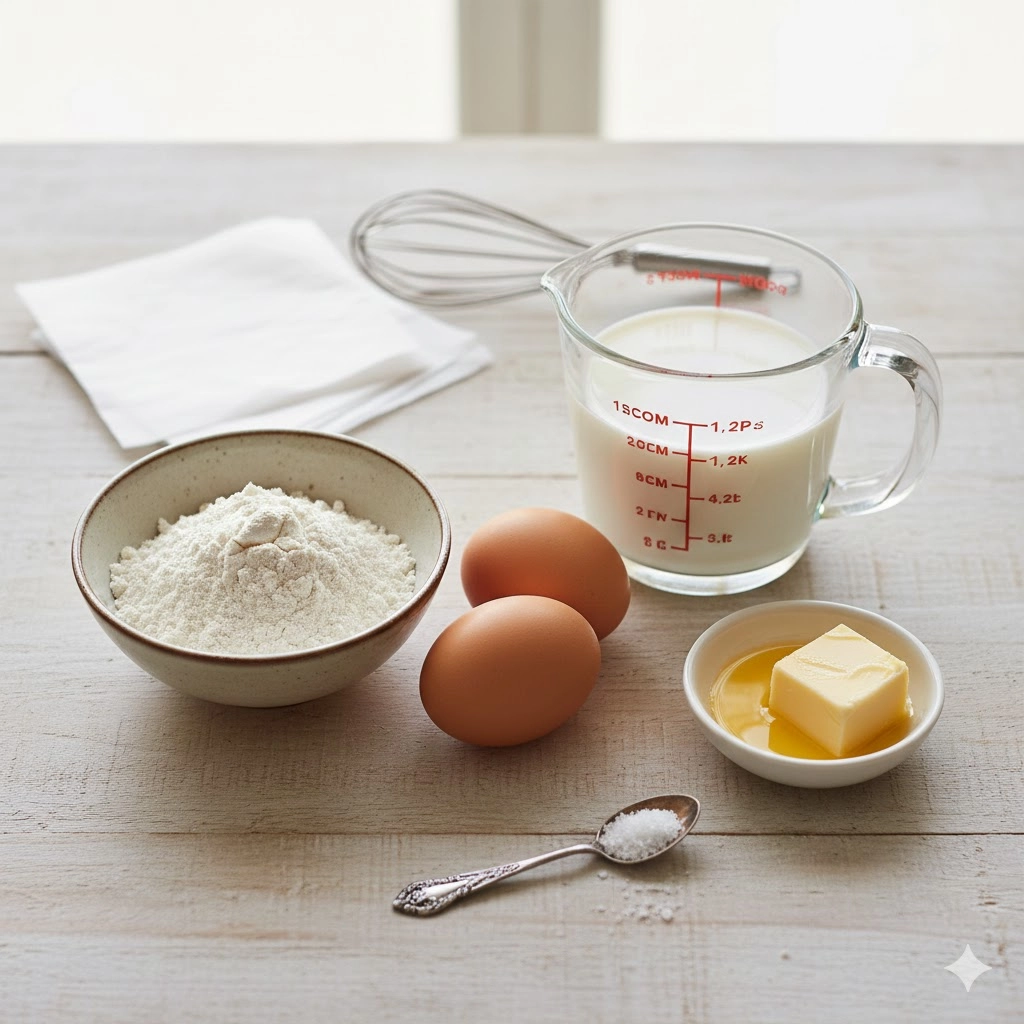
- The Flour Component: One cup of all-purpose flour, meticulously leveled for accuracy.
- The Liquid Foundation: One and a half cups of whole milk, which provides the necessary richness.
- The Binding Agent: Two large, fresh eggs to give the structure its flexibility.
- The Fat: Two tablespoons of unsalted butter, melted and slightly cooled, plus a small amount for the skillet.
- The Seasoning: One half teaspoon of fine salt to sharpen the other flavors.
Streamlined Preparation Method
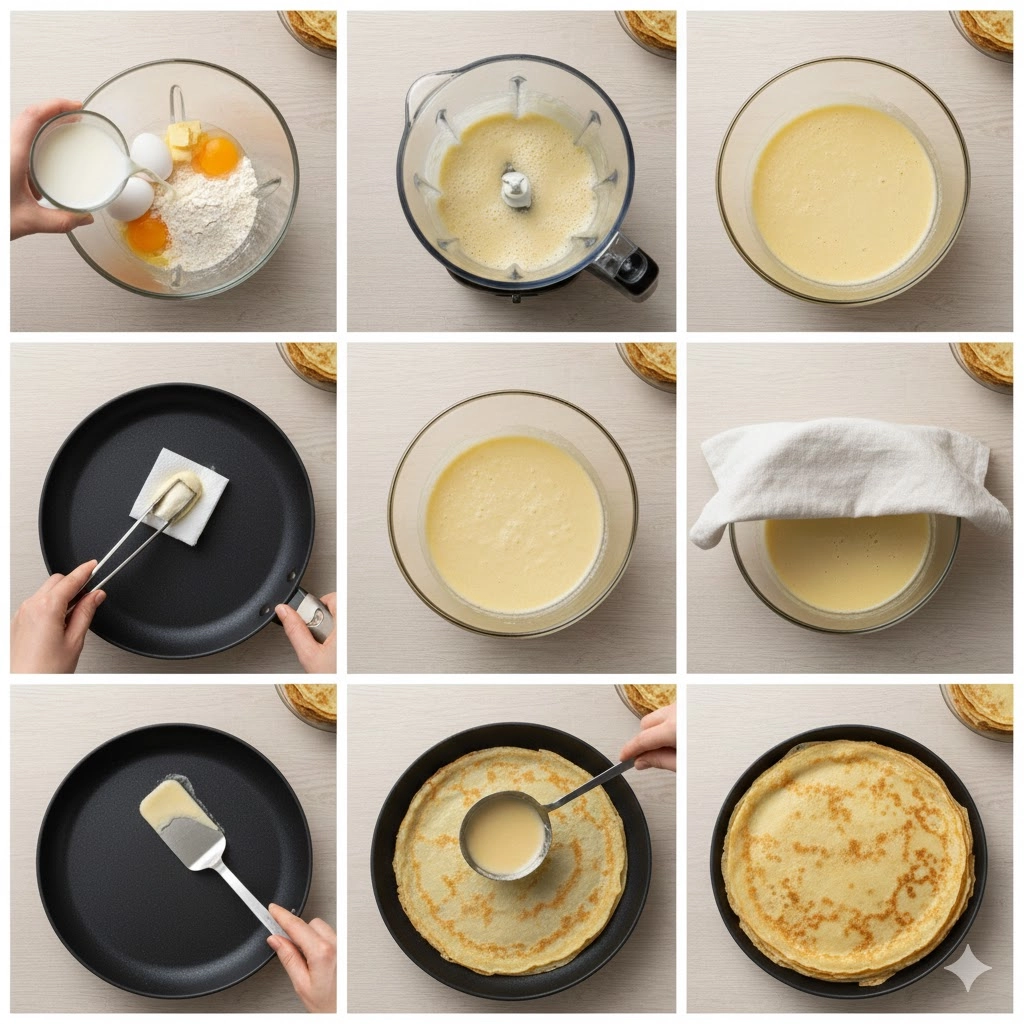
- In a large mixing vessel or a blender, combine the milk, eggs, flour, salt, and melted butter.
- Whisk or pulse until the mixture reaches the consistency of heavy cream with no visible lumps.
- Allow the batter to sit undisturbed for at least thirty minutes at room temperature.
- Place a ten inch non-stick pan over medium heat until it radiates a steady warmth.
- Apply a very thin film of butter to the cooking surface using a paper towel.
- Ladle approximately two to three tablespoons of batter into the center of the pan.
- Rotate the pan with a quick, circular motion to distribute the batter evenly to the edges.
- Wait for the surface to lose its shine and the edges to turn a light golden brown.
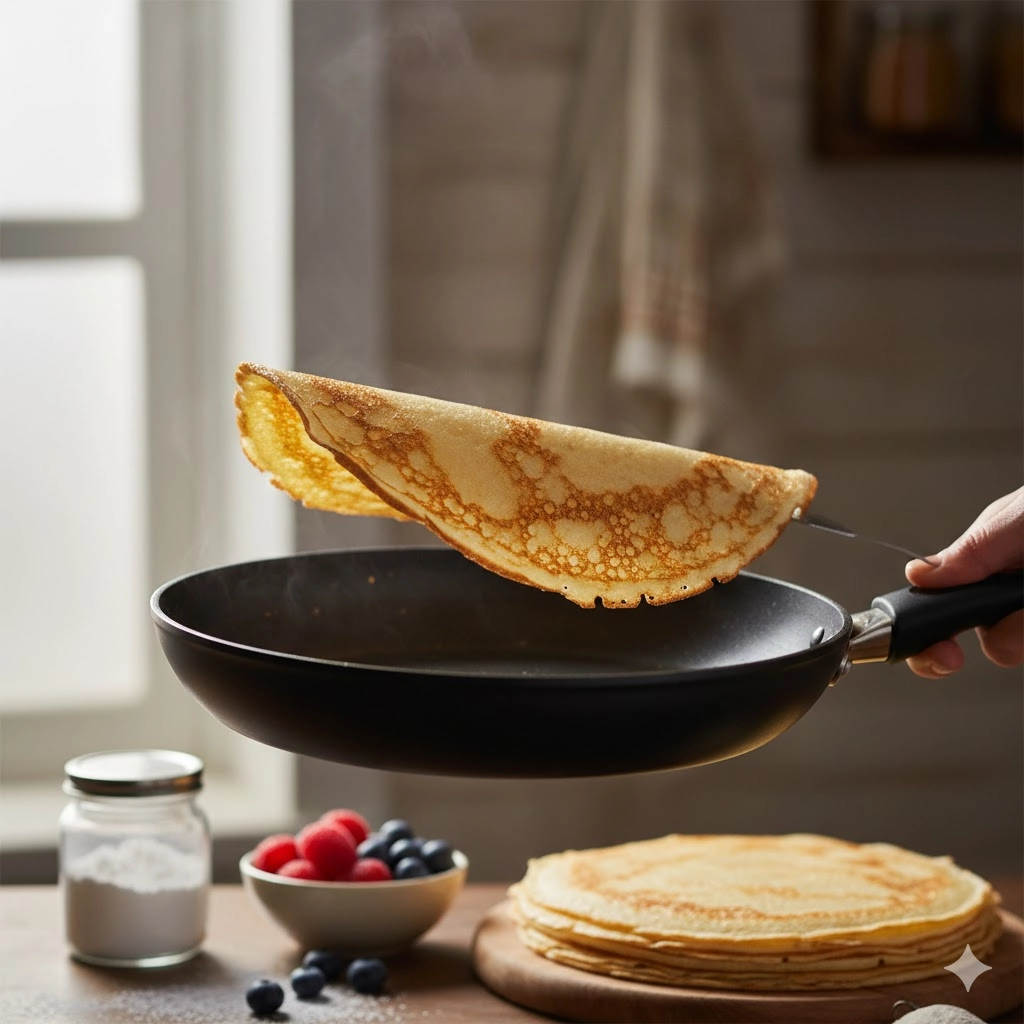
- Flip the disc with a single, confident motion and cook for twenty more seconds.
- Transfer to a wire rack or warm plate and repeat with the remaining liquid.
Detailed Technique and Visual Indicators
The Science of Fluidity
When preparing basic crêpes, the viscosity of your batter is your primary concern. If the batter is too thick, you will end up with a small, heavy pancake; if it is too thin, the structure will tear upon flipping. The ideal batter should coat the back of a spoon but remain translucent. During the resting phase, the starch granules in the flour expand, which thickens the liquid slightly. If you find the batter has become too heavy after resting, do not hesitate to whisk in a teaspoon of water or milk to restore its pourable nature.
Managing the Skillet
Temperature control is the difference between a tender crêpe and a tough one. You are looking for a heat level that is high enough to set the batter quickly but low enough that you have time to swirl it before it hardens. If the batter creates large bubbles immediately, turn the heat down. The surface of the pan should be “slick” rather than “greasy.” Using too much butter will cause the batter to slide around without sticking, preventing you from achieving that perfectly thin, even layer.
Sensory Cues for Flipping
The first side is your “presentation side.” You will know it is time to flip when the steam stops rising and the edges begin to curl away from the pan. The aroma should be reminiscent of toasted butter and sweet grain. Use a thin spatula to lift the edge; if you see a beautiful, marbled brown pattern, it is ready. The second side requires significantly less time—just enough to set the proteins so the crêpe doesn’t feel damp when folded.
Refined Tips for Success
- Avoid Over-Aeration: If using a blender, use the lowest speed possible. Introducing too much air can cause the crêpes to be filled with tiny holes, making them less effective at holding fillings.
- The Paper Towel Trick: Instead of dropping butter directly into the pan, dip a folded paper towel into melted butter and wipe the pan. This ensures an even, microscopic layer of fat.
- Consistent Volume: Use a dedicated measuring cup or a specific ladle for every pour. Consistency in volume leads to consistency in cooking time.
- Cooling Properly: If you intend to fill them later, let them cool individually on a wire rack before stacking. This prevents the centers from becoming gummy due to trapped moisture.
- Batter Temperature: If your milk and eggs are cold, the melted butter may clump. Ensure all ingredients are close to room temperature for the smoothest emulsion.
Creative Adaptations
The Herb-Infused Galette
For a savory twist, whisk in two tablespoons of fresh minced chives and a crack of black pepper. These are exceptional when filled with smoked salmon and a dollop of crème fraîche.
Sweet Vanilla Bean
Scrape the seeds of half a vanilla bean into the milk before mixing. The tiny black specks and floral aroma elevate the basic crêpes into a dessert-worthy centerpiece.
The Whole Grain Version
Substitute thirty percent of the white flour with whole wheat pastry flour. This adds a nutty depth and a slightly sturdier bite without making the crêpes overly dense.
Serving and Pairing Suggestions
Savory Lunch
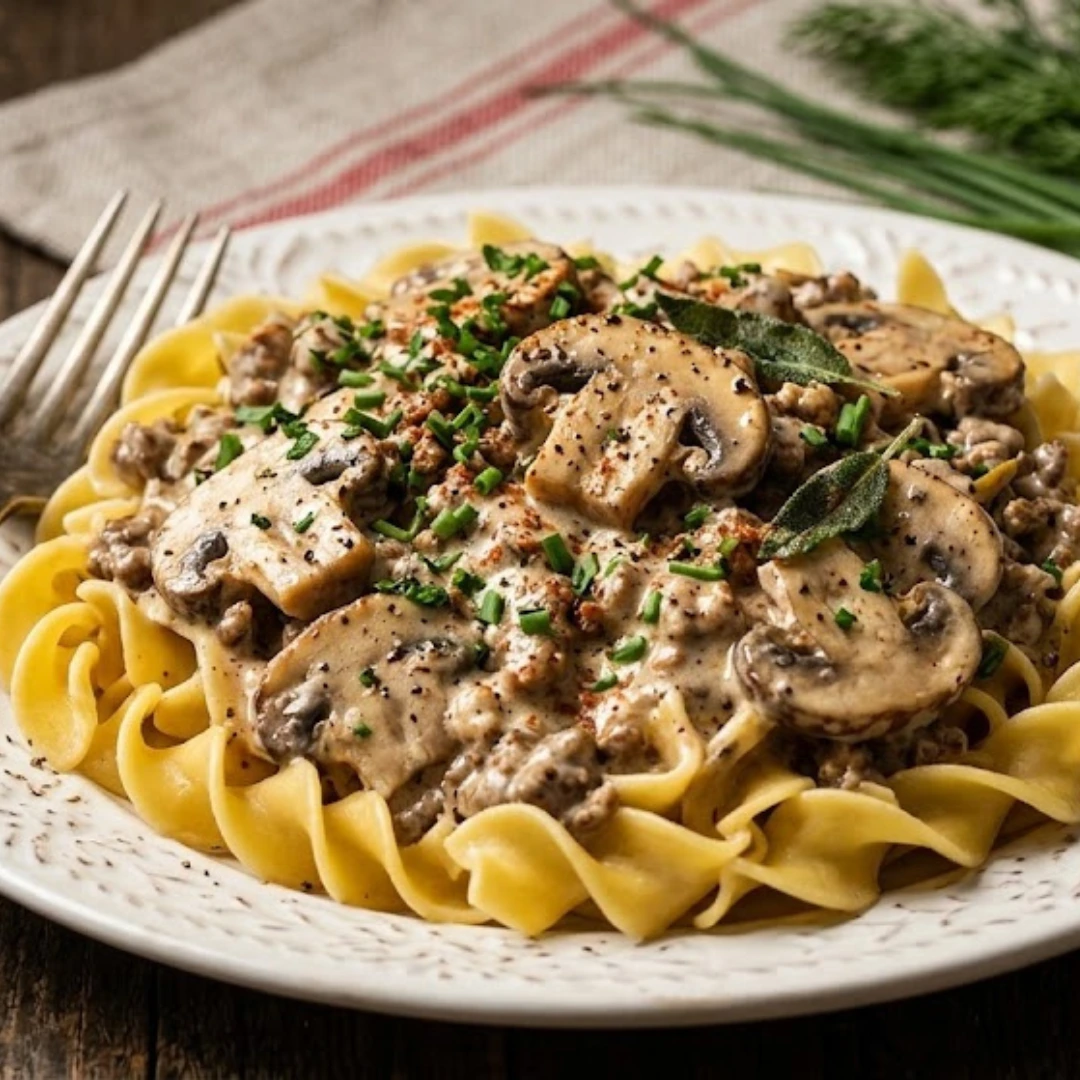
Fill the center with sautéed spinach, sautéed mushrooms, and a sprinkle of Gruyère cheese. Fold into a square and return to the pan for thirty seconds to melt the cheese.
Sweet Breakfast
Spread a thin layer of apricot preserves or orange marmalade over the surface. Roll tightly and garnish with toasted almond slivers and a dusting of confectioners’ sugar.
Dessert Flambé
Fold the crêpes into quarters and simmer them briefly in a pan with orange juice, butter, and a splash of brandy for a simplified take on a classic French dessert.
Common Inquiries
Why do my crêpes keep tearing?
Tearing is usually caused by flipping too early or having a batter that is too thin. Ensure the edges are dry and slightly crisp before attempting to flip. If the batter seems very fragile, try adding an extra tablespoon of flour to provide more structure.
Is it possible to make these without a blender?
Absolutely. Simply whisk the eggs and milk together first, then slowly sift in the flour while whisking constantly. Straining the final mixture through a sieve will catch any small lumps that weren’t incorporated by hand.
How do I freeze them for later use?
Stack the cooled crêpes with wax paper between each layer and place them in a heavy-duty freezer bag. They will stay fresh for up to sixty days. Thaw them in the refrigerator overnight before gently reheating in a warm oven or skillet.
Nutrition Information
| Nutrient | Amount per Serving |
| Calories | 118 kcal |
| Protein | 4 g |
| Carbs | 13 g |
| Fat | 5 g |
| Fiber | 1 g |
| Sugar | 2 g |
| Sodium | 138 mg |
Disclaimer
Nutrition information is an estimate and may vary based on preparation and ingredients used.
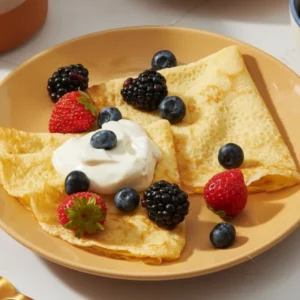
Simple Homemade French Style Basic Crêpes
Ingredients
- 1.5 cups whole milk, room temperature
- 2 large eggs
- 2 tbsp unsalted butter, melted and slightly cooled
- 1 cup all-purpose flour, leveled
- 0.5 tsp fine sea salt
- 1 tbsp granulated sugar (optional for sweet)
- 1 tsp pure vanilla extract (optional for sweet)
Instructions
- Combine the milk, eggs, melted butter, flour, and salt in a high-speed blender.
- Process on high for twenty seconds until completely smooth with no visible lumps.
- Transfer the batter to a bowl and let it rest for thirty minutes at room temperature to hydrate the flour.
- Heat a ten inch non-stick skillet or crêpe pan over medium heat until a drop of water sizzles gently.
- Lightly coat the surface with a small amount of butter using a pastry brush or paper towel.
- Pour one quarter cup of batter into the center and immediately tilt and rotate the pan to spread thinly.
- Cook for sixty to ninety seconds until the edges brown slightly and lift away from the pan.
- Flip carefully and cook the second side for thirty seconds until mottled golden spots appear.
Notes
Equipment
- High-speed blender Or a fine-mesh sieve if whisking by hand
- 10-inch non-stick skillet
- Thin offset spatula For flipping
- mixing bowl
- pastry brush