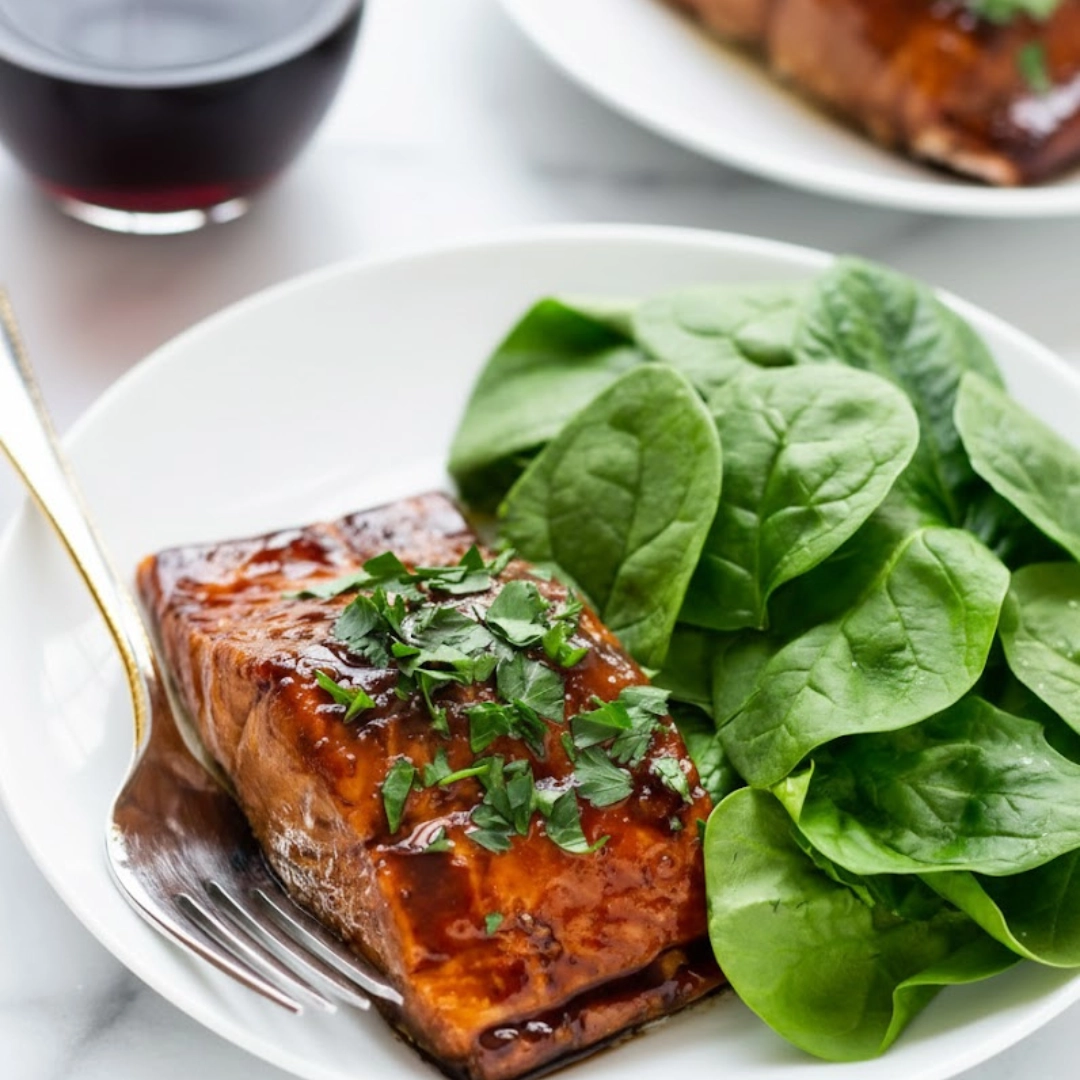
There is something inherently sophisticated about the combination of rich, fatty fish and the sharp, syrupy tang of a dark vinegar reduction. This Balsamic Glazed Salmon is the personification of that elegance, offering a restaurant-quality experience right in your own kitchen. Whether you are planning a quiet, romantic evening for two or simply need a high-protein meal that feels like a reward after a long day, this dish delivers. The beauty of this recipe lies in its simplicity; it transforms a handful of pantry staples—balsamic vinegar, honey, and Dijon mustard—into a complex, sticky glaze that caramelizes beautifully under the heat of the oven. In just twenty minutes, you can serve a centerpiece that looks as though it required hours of preparation.
Table of Contents
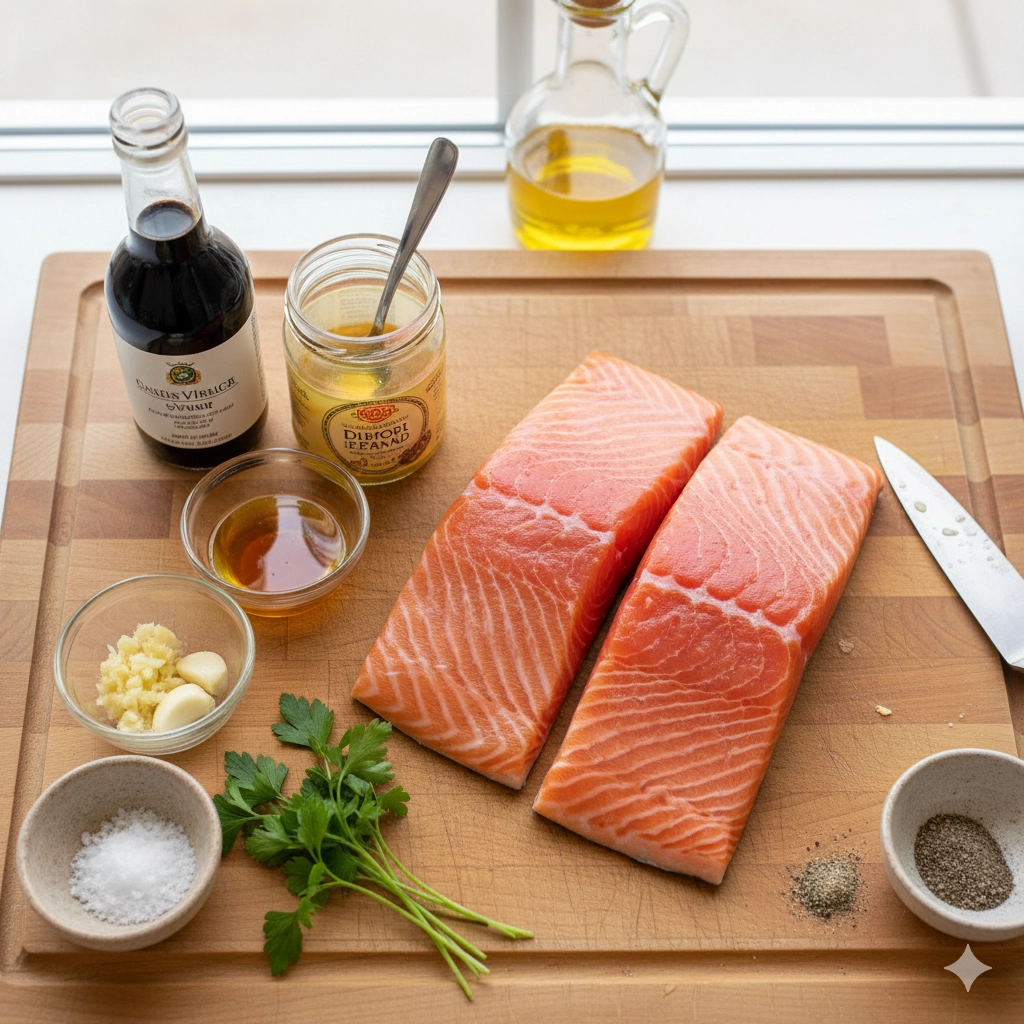
Ingredients
- 2 salmon fillets (5 ounces each)
- 2 teaspoons extra-virgin olive oil
- 2 cloves garlic, minced
- 3 tablespoons balsamic vinegar
- 2 teaspoons honey
- 2 teaspoons Dijon mustard
- 1/2 teaspoon kosher salt
- 1/4 teaspoon ground black pepper
- Chopped fresh parsley for garnish
Instructions
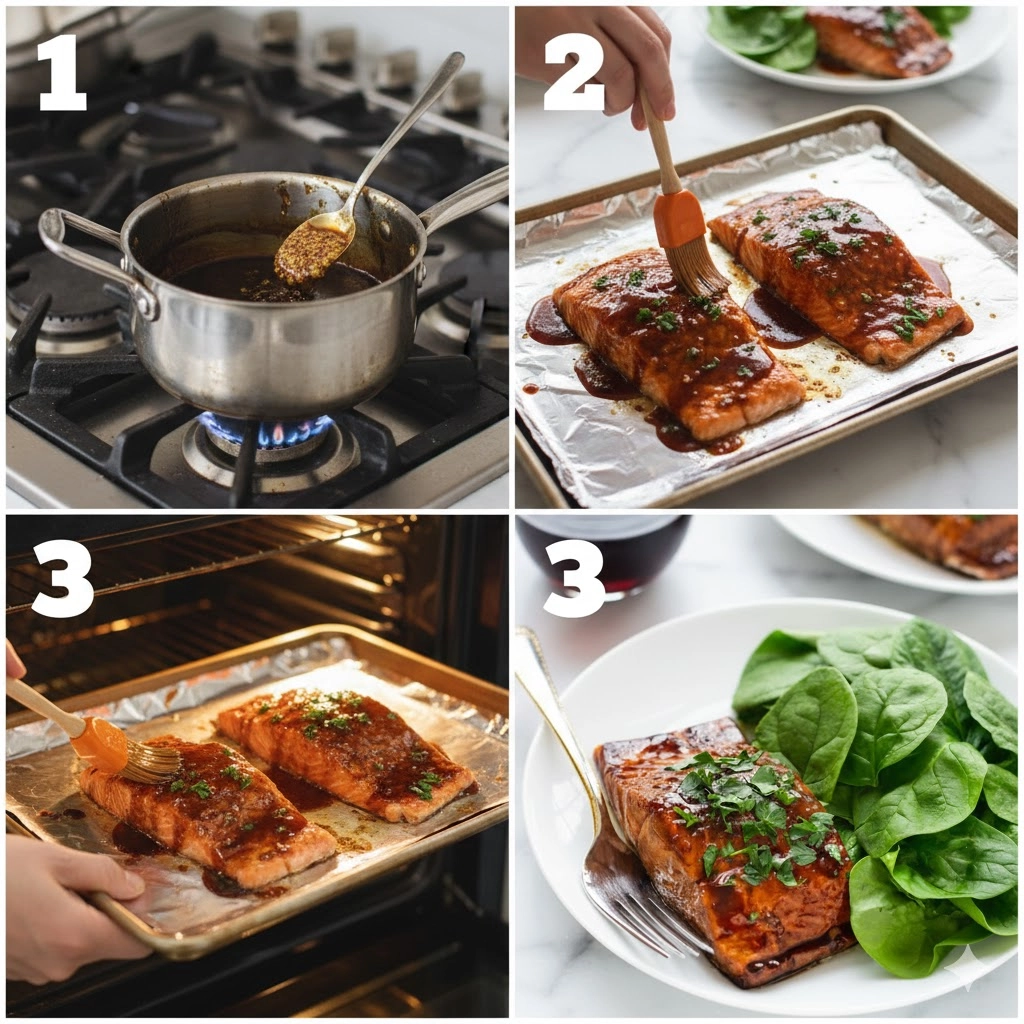
- Preheat and Prep: Begin by preheating your oven to 400 Fahrenheit. Take a rimmed baking sheet and line it with aluminum foil. Avoid using parchment paper for this specific recipe, as the sugar in the glaze can cause parchment to smoke or stick. Lightly coat the foil with non-stick cooking spray to ensure the salmon skin releases easily after baking.
- Sauté the Aromatics: Place a small skillet over medium heat and add the extra-virgin olive oil. Once the oil is shimmering, add the minced garlic. Stir constantly for about 2 minutes until the garlic becomes fragrant and turns a light golden brown. Watch it closely; garlic can turn bitter very quickly if it burns.
- Simmer the Glaze: To the skillet with the garlic, add the balsamic vinegar, honey, Dijon mustard, salt, and black pepper. Whisk the ingredients together thoroughly. Bring the liquid to a gentle simmer and let it cook for about 4 minutes. You are looking for the mixture to reduce and thicken into a syrupy, sticky consistency.
- Initial Glaze and Bake: Arrange the salmon fillets skin-side down on your prepared baking sheet. Using a pastry brush, apply a liberal coating of the warm balsamic reduction over the top and sides of the fish. Place the sheet in the oven and bake for 5 minutes.
- Baste and Finish: Carefully remove the baking sheet from the oven. Use the remaining glaze to baste the fillets once more, building up that flavorful crust. Return the salmon to the oven and continue baking for another 5 to 10 minutes. The fish is done when it flakes easily with a fork and reaches an internal temperature of 140 Fahrenheit (it will rise to the food-safe 145 Fahrenheit while resting).
- Garnish and Serve: Remove from the oven, sprinkle with freshly chopped parsley, and serve immediately while the glaze is warm and tacky.
Mastering the Art of the Balsamic Reduction
The heart of this recipe is the reduction process. Reducing a liquid is essentially the act of evaporating water to concentrate flavor and thicken texture. When you simmer balsamic vinegar with honey, the sugars begin to concentrate, and the acetic acid in the vinegar mellows out, leaving behind a complex, fruity profile.
To achieve the perfect consistency, you must be attentive. The glaze should be thick enough to coat the back of a spoon but still fluid enough to brush onto the raw fish. If you reduce it too far, it can become like hard candy once it hits the cool salmon or the hot oven. If it feels too thick in the pan, you can whisk in a teaspoon of water to loosen it back up. This glaze isn’t just a topping; it acts as a protective barrier that seals in the natural juices of the salmon, preventing the dry, chalky texture often associated with overcooked fish.
Essential Components of High-Quality Salmon
When selecting your protein for this dish, quality is paramount. Because the ingredient list is short, the flavor of the fish will shine through. Look for fillets that are firm to the touch and possess a vibrant, saturated color—ranging from deep orange to bright pink depending on the variety.
Freshness can be determined by scent; high-quality salmon should smell like the clean, salty air of the ocean, never “fishy.” If you are buying a large side of salmon and cutting it yourself, a dedicated fillet knife is an excellent investment to ensure clean, even cuts. Even thickness across your fillets ensures that they cook at the same rate, preventing the thinner tail end from drying out while the thicker center remains raw.
Creative Modifications and Substitutions
While the honey-balsamic pairing is a classic for a reason, this recipe is quite forgiving and allows for several pantry-friendly swaps:
- Sweetener Swaps: If you find yourself without honey, you can easily substitute it with an equal amount of maple syrup for a woodier, autumnal flavor profile. Brown sugar—either light or dark—also works beautifully, lending a deep molasses note to the glaze that pairs exceptionally well with the acidity of the vinegar.
- Vinegar Varieties: While traditional dark balsamic is preferred for its syrupy nature, you could use white balsamic vinegar for a cleaner, milder aesthetic, though the color of the glaze will be significantly lighter.
- Mustard Adjustments: If Dijon is too sharp for your palate, a whole-grain mustard can add a lovely textural element, while a mild yellow mustard can work in a pinch, though it lacks the sophisticated depth of Dijon.
- Garlic Alternatives: Freshly minced garlic provides the best punch, but if you are out, half a teaspoon of garlic powder whisked into the glaze can provide the necessary savory backbone.
Perfect Accompaniments and Serving Suggestions
To turn this Balsamic Glazed Salmon into a complete meal, consider sides that can soak up any extra glaze or provide a crisp contrast to the richness of the fish.
- Grains: A bed of fluffy quinoa or jasmine rice is an excellent choice. For a more Mediterranean feel, serve the salmon over lemon-herb couscous.
- Vegetables: Roasted Brussels sprouts or asparagus are natural partners for balsamic flavors. The high heat of the oven (400 Fahrenheit) allows you to roast these vegetables on a separate tray at the same time the salmon bakes.
- Salads: This salmon is equally delicious when served atop a fresh spinach salad featuring strawberries, goat cheese, and toasted walnuts. The acidity in the berries mirrors the balsamic glaze beautifully.
- Pomegranate Juice: While Pomegranate Juice like a buttery Chardonnay is a traditional choice for seafood, the intensity of this glaze allows you to venture into Pomegranate Juice territory. A light-bodied Pinot Noir or even a Merlot can stand up to the robust, sweet-and-savory profile of the reduction.
Deep-Dive Kitchen FAQ
How do I know when the salmon is perfectly cooked without a thermometer?
While an instant-read thermometer is the most reliable tool, you can check for doneness using the “flake test.” Gently press down on the top of the fillet with a fork or your finger; if the flakes of the fish begin to separate along the white lines of fat (the marbling), it is ready. The center should still look slightly translucent and moist, as it will continue to cook for a few minutes after being removed from the heat.
Why should I use aluminum foil instead of parchment paper for this recipe?
The balsamic glaze contains a high concentration of sugar from both the honey and the vinegar reduction. At 400 Fahrenheit, these sugars can drip onto the pan and caramelize. Parchment paper can sometimes become brittle or even char at high temperatures if sugar spills onto it. Aluminum foil provides a sturdy, heat-conductive surface that makes cleanup much easier when dealing with sticky glazes.
Can I use this balsamic glaze on other types of protein?
Absolutely. This reduction is incredibly versatile. It works wonders as a marinade and glaze for boneless, skinless chicken breasts or thighs. You can also brush it over pork tenderloin or even thick-cut cauliflower steaks for a vegetarian alternative. Just keep in mind that cooking times will vary depending on the thickness and type of protein used.
What should I do if my glaze becomes too thick or “seizes”?
If you simmer the glaze for too long, it may become overly thick or even start to turn into a hard caramel. If this happens, don’t panic. Simply add a splash of water or a tiny bit more balsamic vinegar to the pan and whisk vigorously over low heat. The added moisture will help dissolve the over-concentrated sugars and return the glaze to a spreadable consistency.
Safe Storage and Reheating Practices
If you happen to have leftovers, this salmon stores remarkably well. Place the cooled fillets in an airtight container and keep them in the refrigerator for up to 3 days. For those who enjoy meal prepping, you can freeze the cooked salmon for up to 3 months, though the texture may become slightly softer upon thawing.
When it comes to reheating, the goal is to warm the fish without drying it out. The best method is to place the salmon in an oven set to 350 Fahrenheit. Cover the dish loosely with foil to trap moisture and heat for about 10 minutes or until just warmed through. Alternatively, leftover balsamic salmon is absolutely delicious served cold, flaked over a Caesar salad or tucked into a wrap for a quick and healthy lunch the next day.
Nutritional Profile
| Nutrient | Amount Per Serving |
| Calories | 325 kcal |
| Total Fat | 15 g |
| Saturated Fat | 2 g |
| Cholesterol | 94 mg |
| Sodium | 650 mg |
| Total Carbohydrates | 11 g |
| Dietary Fiber | 1 g |
| Sugars | 9 g |
| Protein | 34 g |
| Potassium | 878 mg |
Nutritional Disclaimer
The nutritional information provided is an estimate based on the specific ingredients listed in this recipe. Actual values may vary depending on the brand of balsamic vinegar used and the specific cut of salmon. For those with specific dietary requirements, please consult a professional nutritionist.
Final Thoughts on This Gourmet Staple
This Balsamic Glazed Salmon proves that you do not need a massive list of ingredients or hours of labor to produce a meal that feels truly special. By focusing on a few high-quality components and mastering a simple reduction technique, you unlock a world of flavor that balances sweet, savory, and acidic notes in every bite. It is a reliable, healthy, and stunning dish that deserves a permanent spot in your recipe rotation. Once you see how the glaze transforms under the oven’s heat into a shimmering, mahogany crust, you will find yourself coming back to this 20-minute masterpiece again and again.
Balsamic Glazed Salmon
Ingredients
- 2 salmon fillets (5 ounces each)
- 2 teaspoons extra-virgin olive oil
- 2 cloves garlic, minced
- 3 tablespoons balsamic vinegar
- 2 teaspoons honey
- 2 teaspoons Dijon mustard
- 0.5 teaspoon kosher salt
- 0.25 teaspoon ground black pepper
- 1 tbsp chopped fresh parsley, for garnish
Instructions
- Preheat your oven to 400 Fahrenheit. Line a rimmed baking sheet with aluminum foil and coat it with non-stick cooking spray.
- In a small skillet, heat the olive oil over medium heat. Add the minced garlic and sauté for about 2 minutes until fragrant and starting to brown, being careful not to let it burn.
- Add the balsamic vinegar, honey, Dijon mustard, salt, and pepper to the skillet. Whisk to combine and simmer for about 4 minutes until the mixture reduces and thickens into a sticky glaze.
- Place the salmon fillets skin-side down on the prepared baking sheet. Brush them liberally with the prepared balsamic glaze.
- Bake the salmon for 5 minutes, then remove briefly from the oven to baste again with more glaze.
- Return the salmon to the oven and bake for an additional 5 to 10 minutes until the fish flakes easily with a fork and is cooked through.
- Sprinkle the hot salmon with fresh parsley and serve immediately.
Notes
Equipment
- Small skillet For making the reduction
- baking sheet
- aluminum foil Prevents sticking and simplifies cleanup
- pastry brush For applying the glaze
- Instant-read thermometer To check for 140-145 Fahrenheit internal temp