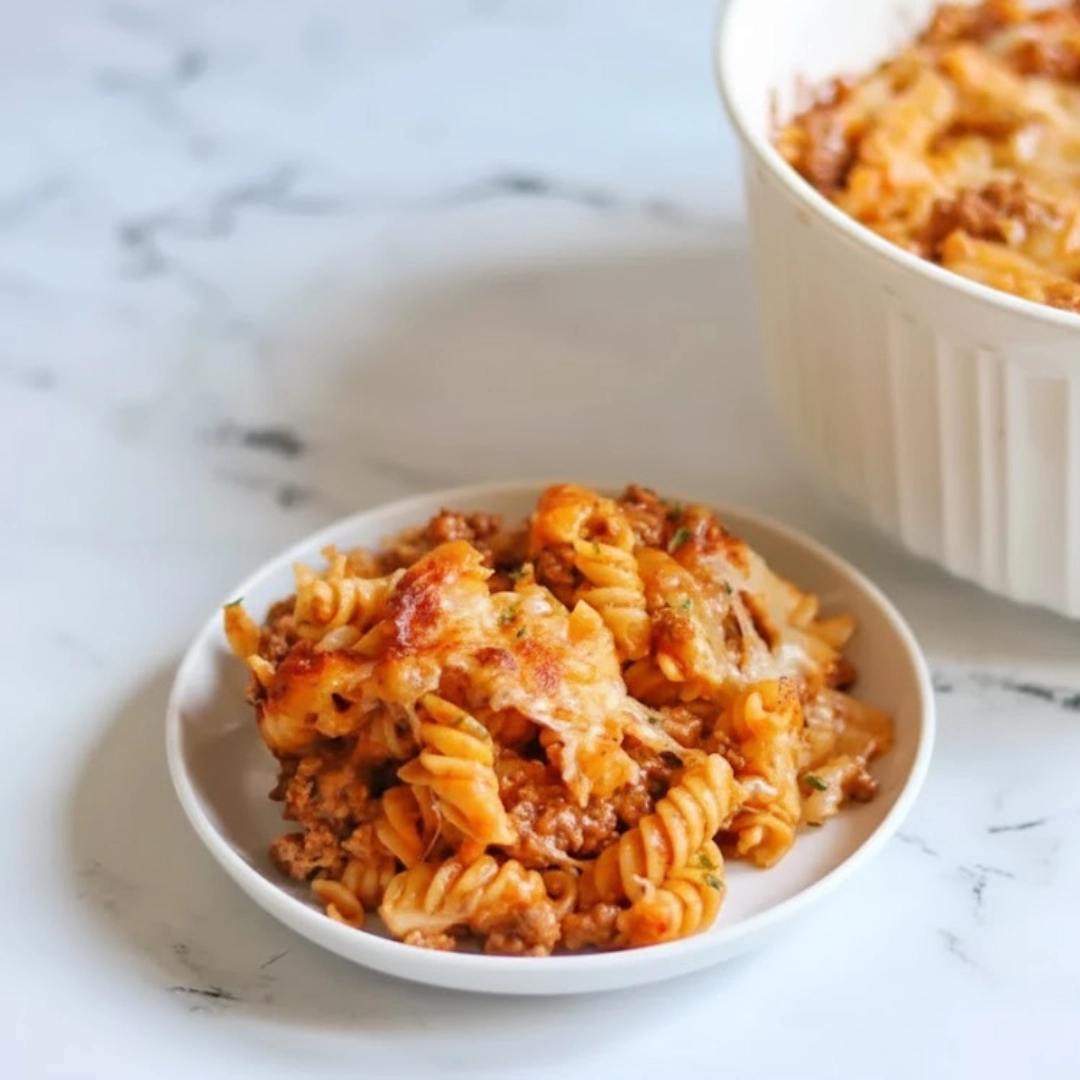
This particular casserole represents the pinnacle of weeknight culinary practicality. At its core, it is a testament to how four simple components can merge into a hearty, deeply satisfying meal that transcends its humble origins. Forget complex techniques and long ingredient lists; this dish delivers a rich, savory, and cheesy embrace that appeals to nearly every palate, making it a reliable staple for busy families and budget-conscious cooks alike. The preparation is straightforward, involving minimal cleanup and maximum flavor return. If you need a comforting, full meal on the table fast, the 4-Ingredient Hamburger Casserole is the proven answer—a guaranteed winner that requires almost no specialized skill, only a desire for good food.
Table of Contents
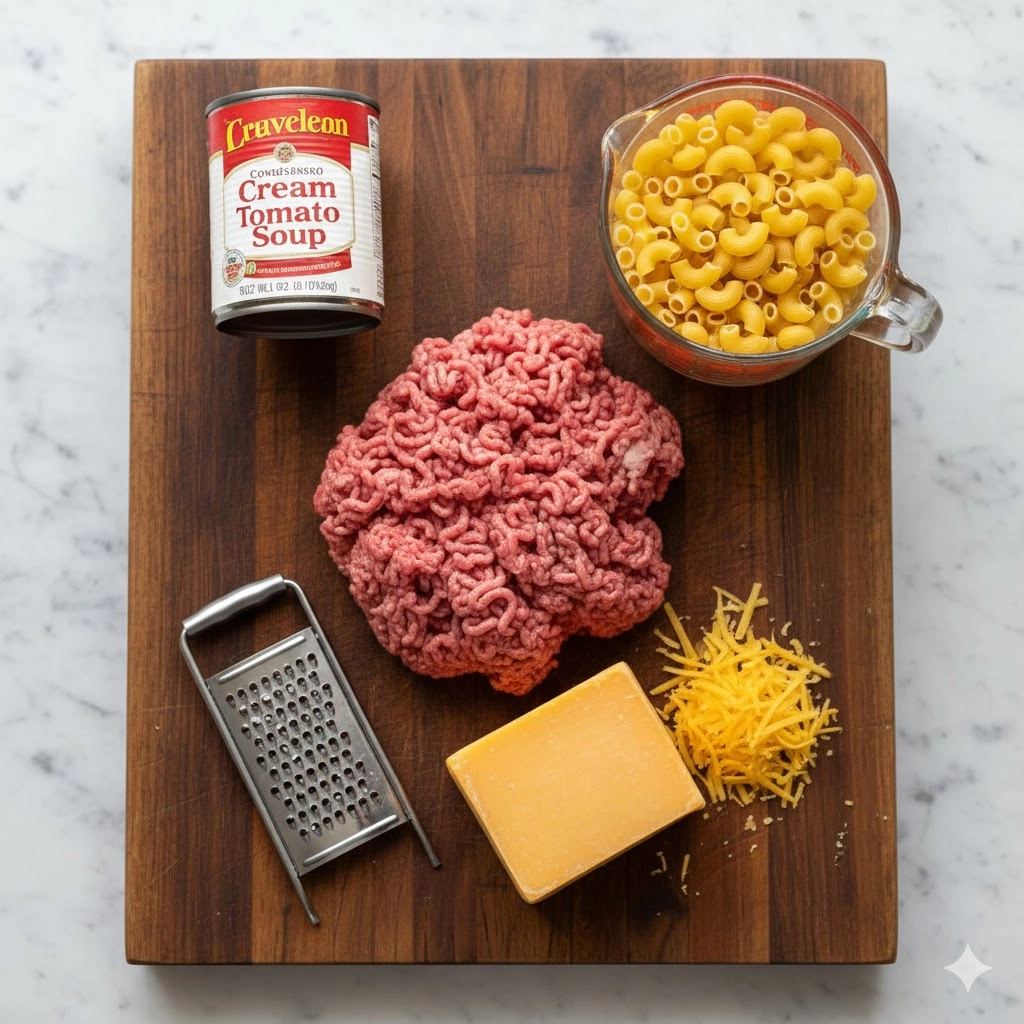
The Essential Components
These are the fundamental items needed to create the base recipe. The quality of your ingredients, even in a dish this simple, will define the final experience.
Protein and Sauce Base
- One pound (16 ounces) lean ground beef (preferably 85/15 ratio)
- One can (10 and three-quarters ounces) condensed cream of tomato soup
Starch and Finishing
- Two cups uncooked elbow macaroni (or small pasta shape like shells or rotini)
- Two cups shredded sharp Cheddar cheese
Assembly and Baking: A Quick Reference
This brief overview outlines the high-level process from start to finish. Detailed execution notes follow in the next section.
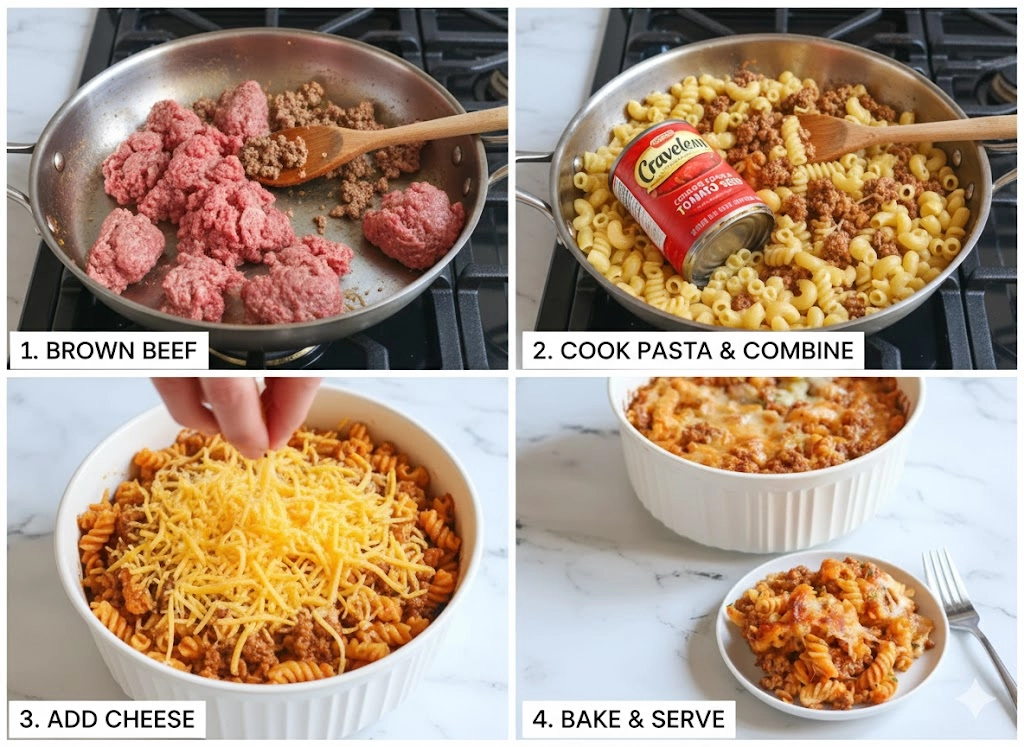
- Brown the Beef: In a large skillet, cook the ground beef over medium-high heat until it is fully browned and no pink remains. Drain off any excess fat from the pan.
- Cook the Pasta: While the beef is browning, prepare the elbow macaroni according to the package directions, ensuring it is cooked just short of al dente. Drain the pasta well.
- Combine the Core: Return the drained beef to the pan. Stir in the condensed cream of tomato soup and the cooked macaroni, mixing thoroughly until everything is evenly coated in the sauce.
- Prepare for the Oven: Transfer the entire beef-and-pasta mixture into a nine-by-thirteen-inch baking dish, distributing it evenly across the bottom.
- Add the Cheese: Sprinkle the two cups of shredded Cheddar cheese generously over the top surface of the casserole mixture.
- Bake: Place the casserole in a preheated oven and bake at three hundred seventy-five Fahrenheit for approximately twenty to thirty minutes, or until the cheese is melted and bubbly and the filling is heated through.
- Rest and Serve: Remove the dish from the oven and allow it to cool for five to ten minutes before portioning and serving.
Deep Dive into the Technique
While the instructions are simple, paying attention to specific cooking cues elevates this straightforward meal from ordinary to truly satisfying. The key to this dish is ensuring all components are properly prepped before the final bake.
The Ground Beef Stage: Building the Foundation
Start with a generous, heavy-bottomed skillet that can handle the volume of the beef without overcrowding. Medium-high heat is the sweet spot; it allows the beef to sear and brown rather than steam, which is critical for developing a depth of savory flavor. As you cook the beef, break it down with the back of a wooden spoon or spatula into fine, even crumbles. The moment the last trace of pink disappears, you must take the pan off the heat and drain the fat.
Draining the fat is non-negotiable. If you leave it in, the finished casserole will be greasy, and the tomato soup will not be able to bind the ingredients effectively, resulting in a separated, less appealing texture. A simple method is to tip the pan and use a spoon to scoop out the rendered liquid, or carefully pour it into a heat-safe jar for disposal later. Do not rinse the beef, as this washes away the seasoning and flavor remnants.
Achieving the Ideal Pasta Texture
The pasta must be undercooked—or al dente—before it goes into the oven. Casseroles are inherently steamy, and the pasta will continue to cook and absorb moisture while baking in the three hundred seventy-five Fahrenheit oven. If you cook it to standard al dente (usually eight to ten minutes), it will emerge from the oven mushy and waterlogged.
Instead, look for a cooking time about two minutes shorter than the package suggests. The macaroni should still have a slight, firm resistance at its core when you bite into it. Once cooked, drain it immediately and briefly rinse it with warm water. This stops the cooking process and washes away excess starch, which prevents the pasta from turning into a sticky, unmanageable mass when combined with the soup.
The Marriage of Ingredients
When mixing the drained beef, cooked pasta, and condensed tomato soup, ensure you are gentle but thorough. The condensed soup is quite thick, so you must use a strong spatula to fold it over the beef and pasta. Continue stirring until every piece of macaroni and every crumble of beef is completely coated in the bright, creamy red sauce. This thorough coating is what guarantees a cohesive final casserole; dry patches will emerge from the oven tough and unappetizing. The mixture should feel warm and slightly loose at this stage, ready for the oven to set it.
The Perfect Bake and Cheese Finish
Transferring the mixture to a nine-by-thirteen-inch dish is the standard for this yield, as it provides enough surface area for the dish to heat evenly and for the top layer of cheese to achieve maximum melt. Distribute the shredded Cheddar cheese evenly, right up to the edges. A nice, sharp Cheddar works best here, as its flavor cuts through the richness of the beef and the sweetness of the tomato.
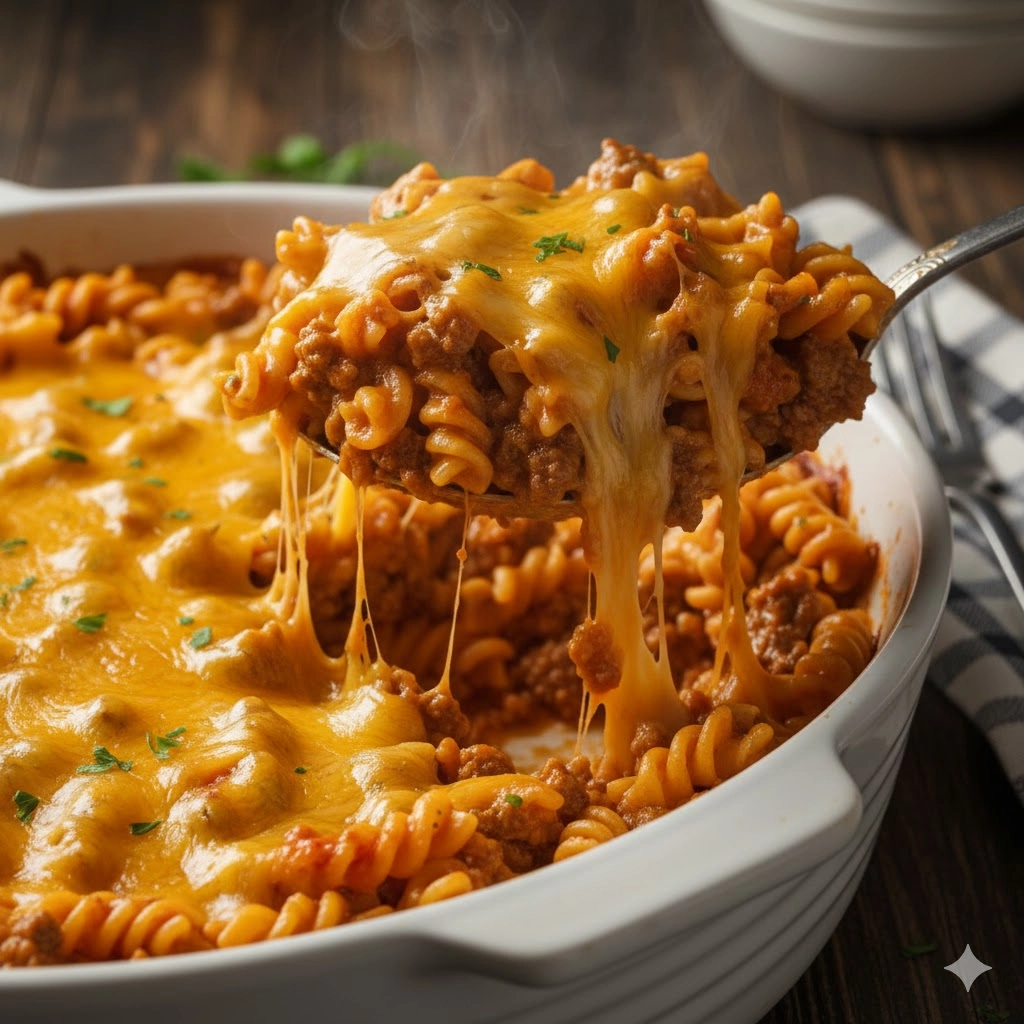
Baking at three hundred seventy-five Fahrenheit is high enough to generate heat quickly but low enough to prevent the top cheese from burning before the center is hot. The visual cue for doneness is not just melted cheese, but bubbly cheese—you should see the edges turning a light, golden brown and the sauce beneath actively simmering. Once removed from the oven, resist the urge to immediately serve. A five-to-ten-minute rest allows the residual heat to finish setting the sauce, making it neater and easier to serve, ensuring the casserole holds its shape nicely on the plate.
Elevating Simplicity: Expert Kitchen Advice
Even the most minimalist recipe benefits from a few expert adjustments that maximize flavor and texture.
- Bloomsbury Flavor Boost: Before adding the condensed soup, toss the drained ground beef with one teaspoon of garlic powder and half a teaspoon of dried oregano. Cook these seasonings for about thirty seconds in the residual heat before mixing in the soup. This brief “blooming” process awakens the aromatics, injecting a subtle herbaceous undertone without adding a visible ingredient.
- The Secret Splash: Condensed tomato soup can sometimes lean heavily toward the sweet side. To balance this, stir in one teaspoon of apple cider vinegar or balsamic vinegar along with the soup. The acidity brightens the overall flavor profile, making the casserole taste less one-dimensional.
- Use Block Cheese: While pre-shredded cheese is convenient, it often contains starches or anti-caking agents that hinder a truly smooth melt. Buy a block of sharp Cheddar and shred it yourself just before use. The freshly grated cheese melts far silkier and creates a more luxurious, uniform crust.
- Cover for Creaminess: If you prefer a creamier, softer top rather than a crisp cheese crust, cover the casserole dish tightly with aluminum foil for the first fifteen minutes of baking. Remove the foil for the final five to ten minutes to allow the cheese to brown slightly.
- Adjusting for Leanness: If you opt for extra-lean ground beef (ninety percent or higher), you risk the final product tasting a bit dry. To compensate, stir in one tablespoon of olive oil or butter to the cooked beef after draining but before adding the soup. This reintroduces necessary moisture and fat for a tender mouthfeel.
- Salt and Pepper Management: Since condensed soup and shredded cheese are both high in sodium, do not add any salt until the entire dish is baked and tasted. You can always add a finishing grind of black pepper and a pinch of kosher salt at the end, if needed, but you cannot take it away.
- The Dairy Finish: For a luxurious, homemade touch, gently swirl a quarter cup of heavy cream or half-and-half into the casserole mixture just before pouring it into the baking dish. This makes the final sauce significantly richer and more decadent, without compromising the structural integrity of the dish.
Creative Departures: Ingredient Swaps and Flavor Twists
This recipe’s basic structure is robust enough to accommodate several minor changes, allowing you to easily adapt it to what you have on hand or to suit different flavor preferences.
Swapping the Starch
While elbow macaroni is traditional, you can easily substitute other small, sturdy pasta shapes like penne, rotini, or even small shell pasta. The cooking time for the pre-bake al dente stage will vary, so be sure to check the package instructions and subtract two minutes, as advised. For a gluten-free option, use a good quality corn or rice-based pasta, but be aware these tend to absorb more liquid and can break down faster, so ensure they are very undercooked (or even par-boiled for only half the time) before baking.
Varying the Cheese
Sharp Cheddar provides a classic, tangy flavor, but Monterey Jack, Colby, or a blend of Italian-style cheeses (like Mozzarella and Provolone) work beautifully. For a richer, nuttier flavor, swap half of the Cheddar for grated Gruyère or a good quality aged white Cheddar. If you want a bit of heat, consider pepper Jack for the top layer.
Enhancing the Tomato Base
Instead of solely relying on the cream of tomato soup, you can try combining it with a smaller can of condensed cream of mushroom soup for an earthier profile, or condensed Cheddar cheese soup for an even deeper, creamier cheese pull throughout the casserole. A quick hack for a fresher taste is to add one half cup of crushed, drained canned tomatoes or tomato paste along with the condensed soup.
Injecting Vegetables
To boost the nutritional profile without radically changing the dish, you can quickly steam and drain a half cup of frozen peas and carrots, or half a cup of finely chopped onion and celery. Sauté the onions and celery with the beef, or simply fold the peas and carrots into the mixture with the pasta and sauce. This provides color, texture, and vitamins while remaining true to the dish’s simplicity.
Pairing Your Casserole
Because this casserole is rich, savory, and dense, the best accompaniments are those that provide a contrast in texture, temperature, or flavor profile.
The Bright Green Salad
A crisp, cold green salad is the perfect counterpoint. Serve a simple mix of romaine or spring greens tossed with a very acidic vinaigrette—one made with red wine vinegar, olive oil, and a touch of Dijon mustard. The sharpness of the vinegar cleanses the palate and makes the next bite of casserole taste fresh again.
Quick-Roasted Broccoli
Broccoli is a fantastic partner. Toss florets with a little olive oil, salt, and a squeeze of fresh lemon juice. Roast them in the oven alongside the casserole (or on a separate sheet pan) until the edges are slightly charred and crispy, which takes about fifteen to twenty minutes. The char and the lemon provide a necessary bitter and bright contrast to the heavy cheese and beef.
Rustic Garlic Bread
For those who want to lean into the comfort food aspect, simple, high-quality garlic bread is an excellent pairing. Use a crusty French baguette, brush it with melted butter mixed with fresh minced garlic and parsley, and bake it until the edges are golden brown. The crusty bread is ideal for scooping up any residual sauce left in the casserole dish.
Questions from the Kitchen
These frequently asked questions address common concerns about preparation, storage, and planning.
Can I prepare this casserole ahead of time?
Yes, you can assemble the entire dish up to twenty-four hours in advance. Complete steps one through five, but do not bake it. Cover the dish tightly with plastic wrap and refrigerate. When ready to bake, let it sit at room temperature for thirty minutes while the oven preheats, then bake as directed, though you may need to add five to ten minutes to the total baking time to ensure it is heated through.
How do I properly store and reheat leftovers?
Leftovers should be cooled quickly and stored in an airtight container in the refrigerator for up to four days. To reheat a single serving, the best method is to place it in an oven-safe dish, cover it loosely with foil, and warm it in a three hundred fifty Fahrenheit oven until heated through, about fifteen to twenty minutes. Microwave reheating is faster, but can sometimes dry out the pasta.
Is it possible to freeze the finished casserole?
Yes, this casserole freezes well, provided you slightly undercook the pasta even more than usual to account for texture changes upon thawing. Bake the casserole completely, cool it, and then cut it into individual servings. Wrap each serving tightly in plastic wrap, then foil, and store in the freezer for up to three months. Thaw overnight in the refrigerator before reheating.
I don’t have condensed soup. What can I substitute?
While the condensed soup is critical for the texture, you can create a substitute by combining a half cup of tomato paste with one cup of heavy cream or evaporated milk, a half cup of beef broth, and a teaspoon of cornstarch or flour for thickening. Season this mix well with salt, pepper, and onion powder before using it in place of the canned soup.
How can I make the cheese layer more complex?
Instead of just sprinkling the cheese on top, try mixing a quarter cup of Parmesan cheese into the shredded Cheddar. The Parmesan will not melt as uniformly but adds a salty, umami kick to the crust. You can also lightly coat the shredded cheese in one teaspoon of melted butter before spreading it on top, which encourages a deeper, more even golden-brown crust.
Nutritional Snapshot
This nutritional table is provided for informational purposes, representing an average serving size estimate based on the ingredients and a recipe yielding eight servings.
| Nutrient | Amount per Serving |
| Calories | 420 kcal |
| Protein | 28 g |
| Carbs | 35 g |
| Fat | 19 g |
| Fiber | 3 g |
| Sugar | 7 g |
| Sodium | 550 mg |
Nutrition Information Disclaimer
Nutrition information is an estimate and may vary based on preparation and ingredients used.
4-Ingredient Hamburger Casserole
Ingredients
- 1 pound lean ground beef (85/15 ratio preferred)
- 1 can condensed cream of tomato soup (10 and three-quarters ounces)
- 2 cups uncooked elbow macaroni (or small pasta shape)
- 2 cups shredded sharp Cheddar cheese
Instructions
- In a large skillet, cook the ground beef over medium-high heat until it is fully browned and no pink remains. Drain off any excess rendered fat from the pan.
- While the beef is browning, prepare the elbow macaroni according to the package directions, ensuring it is cooked just short of al dente (about 2 minutes less than recommended). Drain the pasta well.
- Return the drained beef to the pan. Stir in the condensed cream of tomato soup and the cooked macaroni, mixing thoroughly until everything is evenly coated in the creamy red sauce.
- Transfer the entire beef-and-pasta mixture into a nine-by-thirteen-inch baking dish, distributing it evenly across the bottom.
- Sprinkle the two cups of shredded sharp Cheddar cheese generously over the top surface. Bake at three hundred seventy-five Fahrenheit for approximately twenty to thirty minutes, or until the cheese is melted and bubbly and the filling is heated through.
- Remove the dish from the oven and allow it to cool and set for five to ten minutes before portioning and serving.
Notes
Equipment
- large skillet or Dutch oven For browning and mixing
- 9×13-inch baking dish For the final bake
- Large pot for pasta