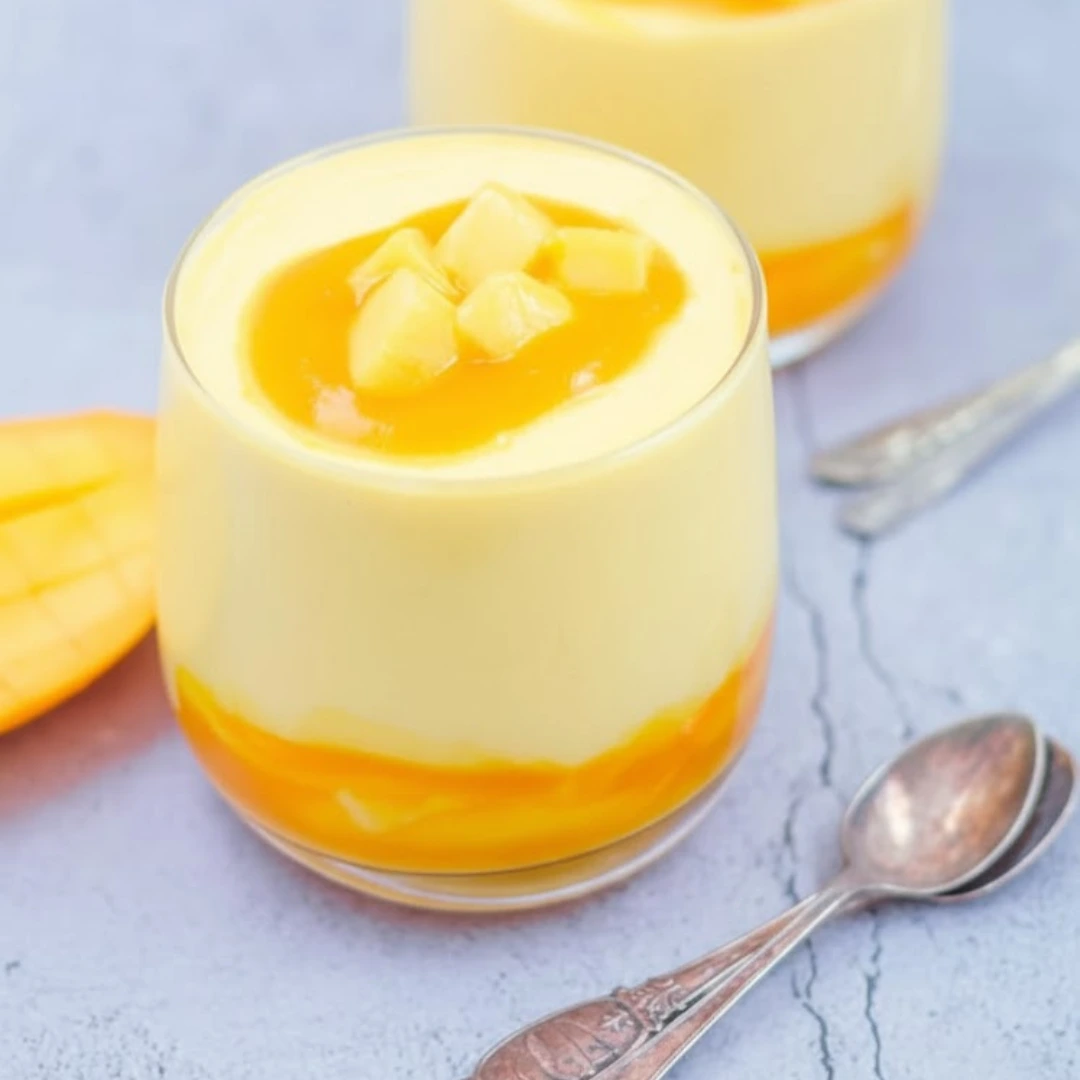
The arrival of mango season always brings a sense of tropical indulgence to the kitchen. There is something truly magical about the way a few simple components can transform into a sophisticated, velvet-textured treat. This 3 ingredient mango mousse is the ultimate solution for those who want a high-end dessert experience without the stress of traditional pastry techniques. It relies on the natural sweetness of mangoes and the structural richness of heavy cream to create a cloud-like consistency that melts on the tongue. Whether you are hosting a summer garden party or just need a quick sugar fix, this recipe delivers elegance with minimal effort.
Table of Contents
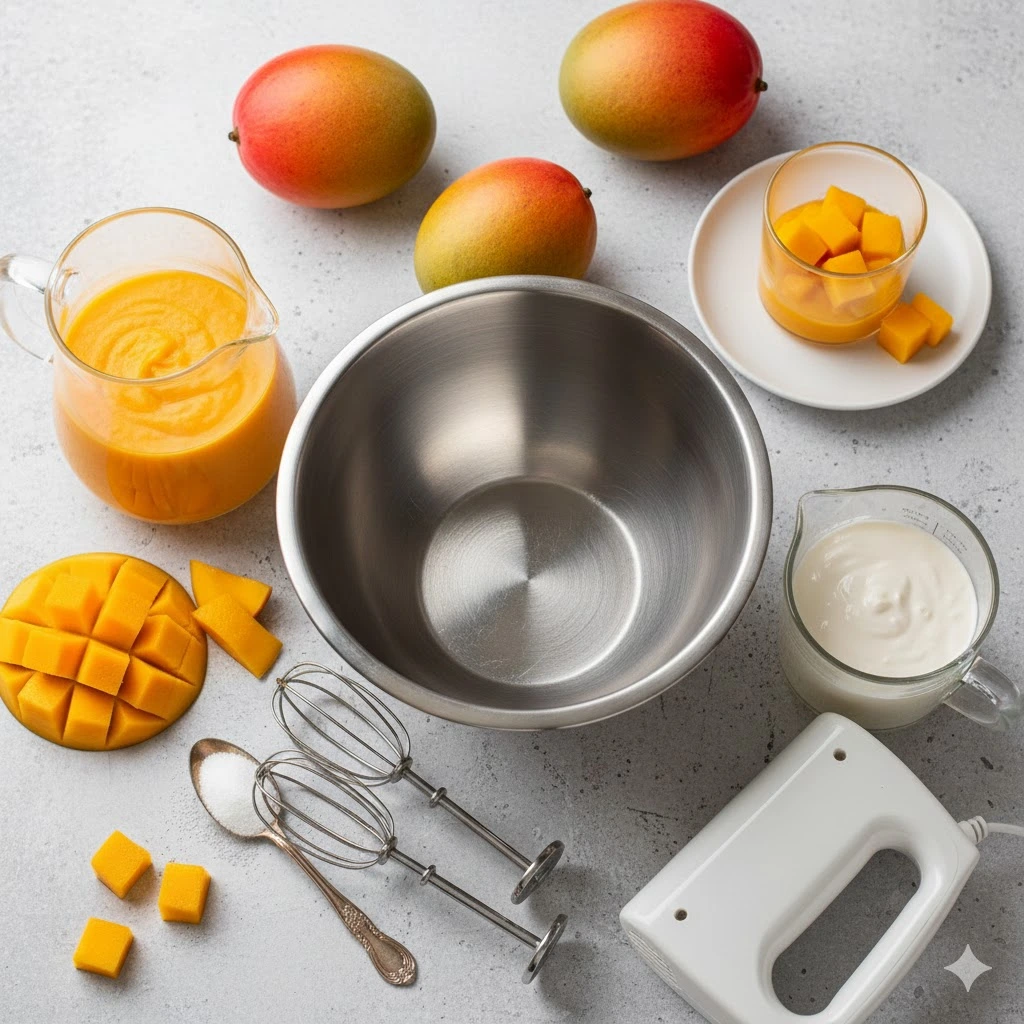
INGREDIENTS
- 1 1/4 cups (or 300 grams) Mango Pulp
- 1 1/4 cups (or 300 milliliters) Double Cream (Heavy Cream)
- 1/4 cup (or 60 grams) Sugar
- 4 to 5 Tablespoons Mango Pulp (extra for layering)
- handful Mango (optional) cut into cubes for garnish
INSTRUCTIONS
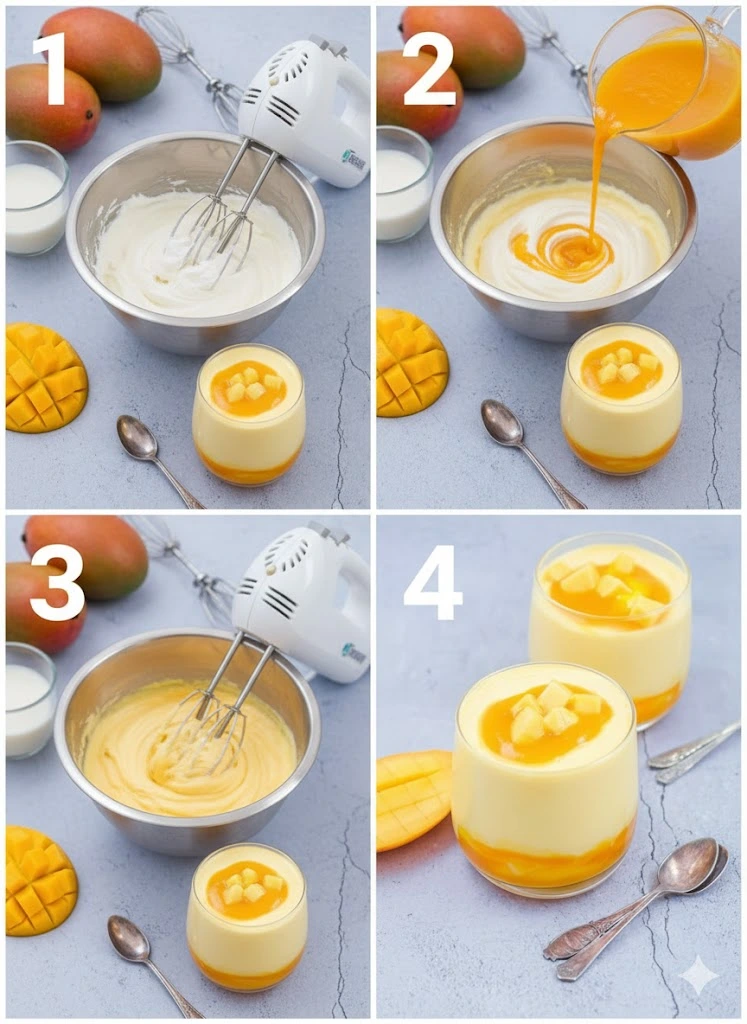
- In a chilled bowl, pour the cream and sugar. Whisk with an electric whisk for around 4 to 5 minutes on medium speed until soft peaks form.
- Add the 1 1/4 cups of mango pulp and whisk again on medium speed for just 2 minutes or until the mango and cream are well combined. Ensure not to over whip the mixture.
- In a serving glass, put a spoonful of the extra mango pulp at the bottom, followed by the prepared mousse mixture.
- Finally, garnish the top with a few fresh mango cubes, cover the glasses with plastic wrap, and keep in the fridge for 30 to 40 minutes to set before serving.
STEP-BY-STEP DETAILS
Creating a mousse that maintains its lift without the use of stabilizers like gelatin or egg whites requires a bit of finesse during the whipping process. The first step involves the heavy cream and sugar. When you start whisking, you are essentially trapping air bubbles within the fat globules of the cream. Using a medium speed is vital here; if you go too fast, you risk turning your cream into butter before it has a chance to become light and airy. You are looking for “soft peaks,” which means when you lift the beaters, the cream should hold its shape but the tip of the peak should gently curl over.
Once that base is established, the mango pulp is introduced. The pulp adds weight and moisture, so the second whisking phase must be brief. You are aiming for a uniform, sunset-orange color without any white streaks of cream remaining. Because there is no gelatin to “set” the mousse into a firm block, the aeration from this whisking is what provides the structure.
The assembly is where the visual appeal comes into play. By placing a small amount of pure mango pulp at the bottom of the glass, you create a beautiful color contrast and a concentrated burst of fruit flavor that the diner hits at the very end. Once the mousse is piped or spooned in, it needs a rest. This 30 to 40 minute window in the refrigerator isn’t just for cooling; it allows the fat in the cream to firm up slightly, giving the dessert a more stable, spoonable texture.
ACHIEVING THE PERFECT MOUSSE CONSISTENCY
The secret to a successful 3 ingredient mango mousse lies in the temperature of your tools and ingredients. High-fat dairy, such as double cream or heavy whipping cream, reacts best to aeration when it is as cold as possible. If the cream is even slightly warm, the fat molecules won’t bond effectively around the air bubbles, resulting in a runny liquid rather than a fluffy foam.
To guarantee success, place your mixing bowl and the whisk attachments in the freezer for about 15 to 20 minutes before you begin. A metal bowl is preferable as it retains the cold better than plastic or glass. Furthermore, keep the cream in the back of the refrigerator—the coldest spot—until the very second you are ready to pour it. If you find your mousse is not thickening, it is likely due to the temperature. In a pinch, you can set your mixing bowl inside a larger bowl filled with ice water while you whisk to maintain that critical chill.
ADAPTING TO FRUIT RIPENESS AND SWEETNESS
Mangoes vary significantly in their sugar content depending on the variety and ripeness. If you are using canned Alfonso mango pulp, which is quite common in this recipe, it often comes pre-sweetened. In such cases, you should taste your pulp first. You might find that you can reduce the sugar to 2 tablespoons or even omit it entirely.
On the other hand, if you are processing fresh mangoes into a puree, you might need the full 1/4 cup of sugar or perhaps a bit more if the fruit is slightly tart. The goal is a balanced sweetness that highlights the floral notes of the mango without being cloying. If you choose to use an alternative sweetener like honey or maple syrup, be aware that these add extra liquid, which can slightly soften the final set of the mousse.
DYNAMIC SERVING AND PRESENTATION IDEAS
Presentation can elevate this simple three-ingredient dish into something truly spectacular. While standard glass tumblers work perfectly, consider using stemmed glassware like martini or champagne glasses for a touch of drama. The transparency of the glass allows the vibrant orange hue to shine.
For a more rustic look, you can serve the mousse in small ceramic ramekins. If you want to go the extra mile, consider topping the mousse with more than just mango cubes. A sprig of fresh mint provides a pop of green contrast, while a dusting of crushed pistachios or toasted coconut flakes adds a much-needed textural crunch. For a festive touch, a single strand of saffron placed on top can hint at the exotic origins of the fruit.
FLAVOR ENHANCEMENTS AND OPTIONAL TWISTS
While the beauty of this recipe is its simplicity, it serves as an excellent canvas for other flavors. If you want to introduce a floral note, a drop of vanilla extract or a tiny splash of rose water can be whisked in with the mango pulp. For those who enjoy a bit of spice, a pinch of ground cardamom is a traditional pairing with mango that adds incredible depth.
If you prefer a brighter, more acidic profile, a teaspoon of fresh lime juice can be folded into the pulp before mixing it with the cream. This cuts through the richness of the double cream and makes the dessert feel even more refreshing on a hot day. You could even swirl in a little bit of passion fruit pulp for an ultra-tropical “two-fruit” mousse experience.
MODIFICATIONS FOR DIETARY PREFERENCES
This recipe is naturally gluten-free and vegetarian, making it a safe bet for most dinner guests. However, if you need to adjust for other needs, there are ways to pivot while keeping the spirit of the dish intact.
For a lower-fat version, you might be tempted to use single cream or half-and-half, but be warned: these will not whip into a mousse. Instead, they would create a mango cream sauce. If you are looking for a dairy-free alternative, chilled full-fat coconut milk (the solid part from the top of the can) can be whipped in a similar fashion to heavy cream, though the flavor profile will lean heavily toward coconut.
FREQUENTLY ASKED QUESTIONS
Why did my mango mousse turn out runny instead of fluffy?
The most common reason for a runny mousse is the temperature of the cream or the bowl. If the cream isn’t cold enough, it won’t trap the air needed for a mousse texture. Another possibility is over-mixing after the mango pulp was added. Once the fruit is in, you only want to mix until combined. If you keep whisking, you can deflate the air bubbles you worked so hard to create during the first step.
Can I use frozen mangoes to make the pulp?
Yes, you can certainly use frozen mango chunks. Simply thaw them completely and then blend them in a high-speed blender until perfectly smooth. It is a good idea to pass the resulting puree through a fine-mesh sieve to remove any fibrous bits, ensuring your mousse is as silky as possible. Ensure the puree is cold before adding it to your whipped cream.
How long can I store this dessert in the refrigerator?
Because this recipe does not use stabilizers like gelatin, it is best enjoyed within 24 hours. Over time, the weight of the mango pulp will cause the air bubbles to collapse, and the mousse may lose its volume and become more liquid. Always keep it tightly covered with plastic wrap to prevent it from absorbing any “fridge smells” from other foods.
Is it possible to make this recipe vegan?
To make a vegan version, you would need to swap the heavy cream for a plant-based whipping cream or the hardened cream from a can of full-fat coconut milk. Ensure the coconut milk has been refrigerated for at least 24 hours so the fat separates from the water. Follow the same chilling and whisking instructions for the best results.
STORAGE AND MAKE-AHEAD ADVICE
This mousse is an excellent candidate for early preparation, provided you don’t make it too far in advance. If you are hosting a dinner, you can prepare the mousse up to 4 to 6 hours ahead of time. Keep the individual portions covered in the fridge. Do not add the fresh mango garnish or any crunchy toppings until the moment you are ready to serve, as the fruit can release juices and the toppings can become soggy.
If you have leftovers, they must stay refrigerated. While the texture might slightly soften by the next day, the flavor remains delicious. If it loses too much air, you can actually freeze the leftovers in small containers to create a “mango mousse semi-freddo” that tastes like a rich, creamy ice cream.
A NOTE ON MANGO VARIETIES
When making this dessert in the United States, you will likely encounter Kent, Keitt, or Tommy Atkins mangoes at the grocery store. While these work well, they can sometimes be more fibrous than Indian varieties like Alfonso or Kesar. If you are using fresh local mangoes, the extra step of straining your pulp is highly recommended. The goal is a texture that is completely uniform, which allows the “mousse” sensation to really stand out.
CELEBRATING THE SIMPLE JOY OF FRUIT
This 3 ingredient mango mousse is a testament to the idea that you don’t need a long list of ingredients to create something memorable. By focusing on quality cream and the best mangoes you can find, you create a dessert that feels light, refreshing, and deeply satisfying. It captures the essence of summer in a glass, proving that sometimes, the simplest recipes are the ones that leave the lasting impression on your guests and your palate.
NUTRITION DATA
| Nutrient | Amount Per Serving |
| Calories | 516 |
| Total Fat | 37 grams |
| Saturated Fat | 23 grams |
| Cholesterol | 114 milligrams |
| Sodium | 50 milligrams |
| Total Carbohydrates | 46 grams |
| Dietary Fiber | 1 gram |
| Sugars | 44 grams |
| Protein | 3 grams |
| Vitamin A | 3879 International Units |
| Vitamin C | 14 milligrams |
| Iron | 13 milligrams |
RECIPE DISCLAIMER
Nutritional information provided is an estimate based on the specific ingredients and measurements listed. Actual nutritional values may vary depending on the brand of mango pulp or cream used. Consult with a professional if you have specific dietary requirements or health concerns.
3 Ingredient Mango Mousse Dessert
Ingredients
- 1.25 cups Mango Pulp (300 grams)
- 1.25 cups Double Cream / Heavy Cream (300 milliliters)
- 0.25 cup Sugar (60 grams), adjust to taste
- 5 tbsp Additional Mango Pulp for layering
- 1 handful Fresh Mango, cut into cubes (optional garnish)
Instructions
- In a chilled bowl, pour the cream and sugar. Whisk with an electric whisk for around 4 to 5 minutes on medium speed until soft peaks form.
- Add the 1.25 cups of mango pulp and whisk again on medium speed for just 2 minutes or until the mango and cream are well combined. Ensure not to over whip.
- In a serving glass, put a spoonful of mango pulp at the bottom, followed by the prepared mousse mixture.
- Finally garnish with fresh mango cubes, cover with plastic wrap, and refrigerate for 30 to 40 minutes to set.
Notes
Equipment
- Deep Bottomed Mixing Bowl Preferably chilled
- Electric Whisk
- Spoon
- Serving Glasses or Ramekins